Pay particular attention to the end of the article which talks about the 2020 Olympics being the advent of a "hydrogen town" housing Olympic athletes. That is only five years away.
There is a movement here in New England to get some hydrogen fueling stations in place. The one controversy blocking some of that work is a sentiment that it still commits us to fueling our cars on fossil fuel and requires lots of processing and transportation. Is using electricity a better choice? How hard is it to build capacity and distribution for either technology?
Of course, most of us like having choices and that may end up driving the market place. Let the consumer decide.
Toyota has been swamped by orders for its first mass market hydrogen fuel-cell car, the company said Thursday, with demand in the first month nearly four times higher than expected for the whole year.
The Japanese auto giant said it had received more than 1,500 orders for its "Mirai" sedan since its launch in mid-December. It had planned to sell 400 in Japan over 12 months.

Unexpectedly high demand for the environmentally friendly four-door car -- which has a 6.7 million yen ($56,900) price tag -- means early buyers might have a bit of a wait.
"Due to the large volume of orders received, Toyota forecasts a significantly longer time to delivery than originally expected," the statement said.
Fuel-cell cars are seen as the Holy Grail of green cars as they are powered by a chemical reaction between hydrogen and oxygen, which emits nothing more harmful than water from its exhaust.
But a limited driving range and lack of refuelling stations have hampered development of fuel-cells and their cousin, all-electric cars, which environmentalists say could play a vital role in cutting greenhouse gas emissions and slowing global warming.
The Mirai can travel about 650 kilometres (400 miles) without refuelling, some three times further than an electric car, and its tank can be filled in a few minutes like gasoline engine vehicles, according to Toyota.
The car will hit the US and some European countries, including Britain, Germany and Denmark, this year, Toyota has said.
It hopes to sell more than 3,000 units by the end of 2017 in the United States, and up to 100 annually in Europe.
Japanese automakers, including Toyota's rivals Honda and Nissan, have been leaders in the green car sector.
This week, Honda unveiled the newest version of its FCV fuel-cell car at the Detroit auto show, with the vehicle set to hit the market next year.
Toyota has announced it is making thousands of patents for fuel cell vehicles royalty-free in an effort to encourage other automakers into the new industry.
News of the rapid success of the Mirai -- which means "future" in Japanese -- comes a week after the Tokyo metropolitan government announced the athlete's village for the 2020 Olympics would be a futuristic "hydrogen town".
On Thursday, Japanese Prime Minister Shinzo Abe said he wants all government departments to use fuel-cell cars, and pledged to cut red tape so it is easier to set up hydrogen re-fuelling stations.


 biomass, hydro, geothermal and onshore wind are all competitive with or cheaper than coal, oil and gas-fired power stations – and that’s even without subsidies.


 “At Toyota, we believe that when good ideas are shared, great things can happen,” said Bob Carter, Senior Vice President of Automotive Operations at Toyota Motor Sales, USA Inc. “The first generation hydrogen fuel cell vehicles, launched between 2015 and 2020, will be critical, requiring a concerted effort and unconventional collaboration between automakers, government regulators, academia and energy providers. By eliminating traditional corporate boundaries, we can speed the development of new technologies and move into the future of mobility more quickly, effectively and economically.”
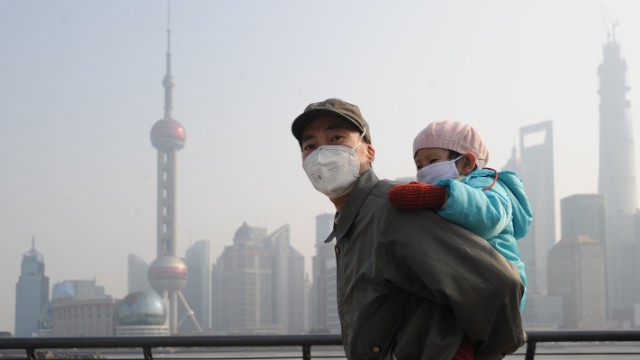 Face masks that protect against the smog are de rigueur for both a morning stroll .....
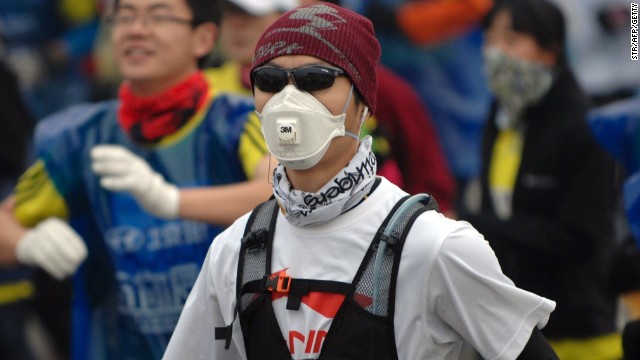 ....and sporting events like the recent Beijing marathon.
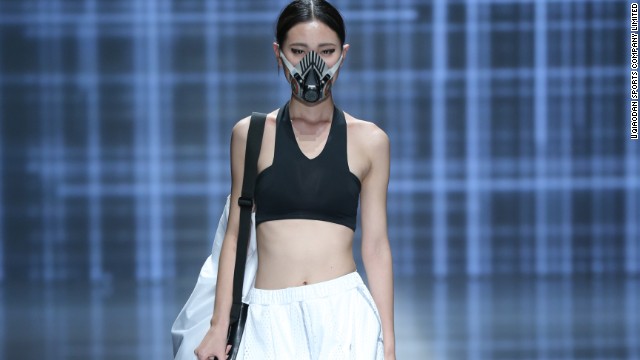 Fashion designers are even incorporating face masks into designs and runway shows.
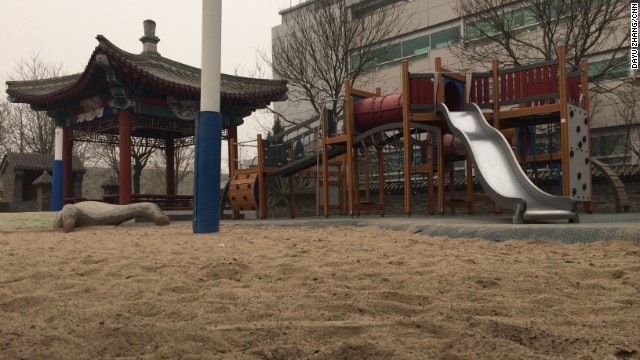 Schools keep students indoors during heavy smog.
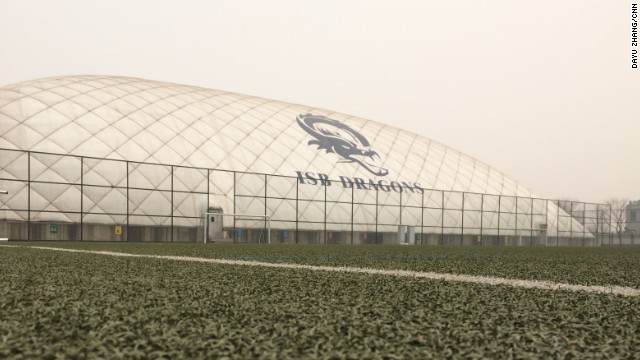 The International School of Beijing has erected a huge dome to allow kids space to roam and breathe.
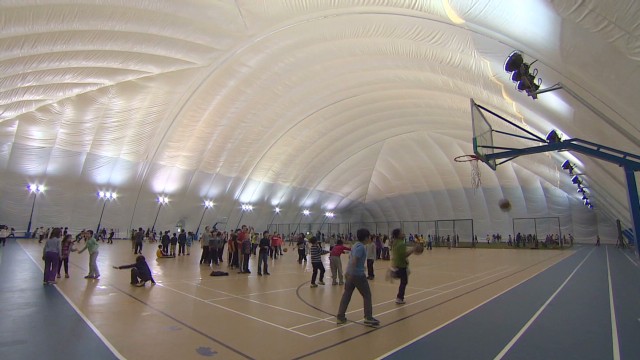 Otherwise they would have little opportunity for physical exercise in clean air.
 The pollution problem is also driving innovation. Infipure's "nose mask" claims to cut 99% of PM 2.5 particles without the bulkiness of a surgical face mask. The disposable filters, made from non-toxic, latex-free materials, are inserted into your nostrils and aim to be undetectable.
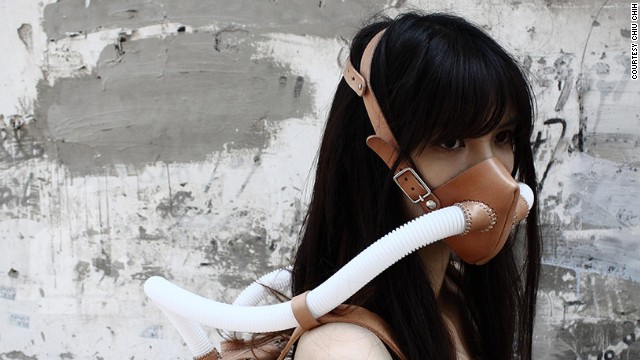 Artists have come up with their own take on the problem. Chiu Chih has designed a a bold, abstract take on an oxygen tank -- a potted plant inside a clear backpack hooked up to two tubes to funnel fresh air into a face mask.
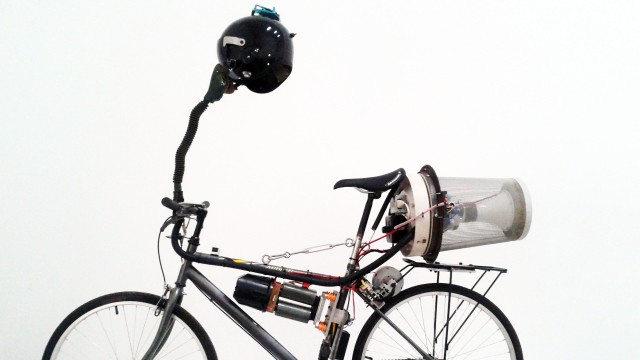 British artist Matt Hope attached a small generator to a bike's back wheel and as he pedals, electricity is produced to power his homemade filtration system. He says it's "an ironic commentary about living in China."
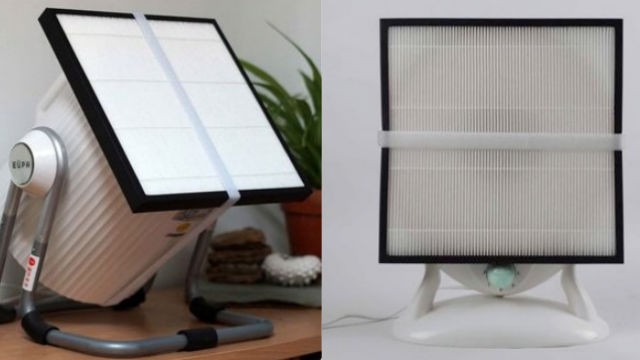 Thomas Talhelm started worrying about the air inside his Beijing home in 2013 but couldn't afford the luxury of an expensive air purifier. He created an air purifier consisting of a basic household fan with a HEPA filter attached to it.
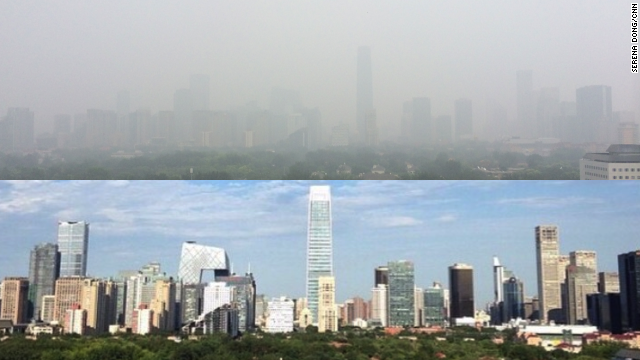
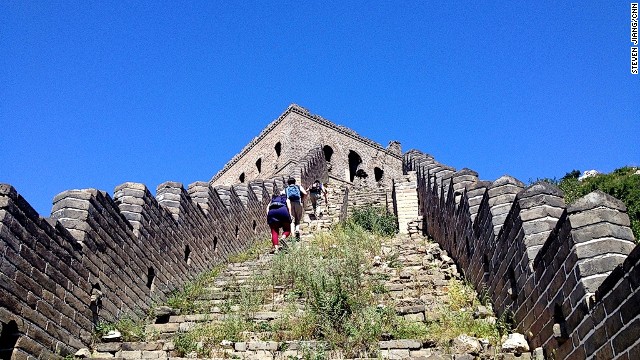 But it's not always gloomy. Clear days provoke a frenzy of photo taking in and around the Chinese capital. These days though are not common enough.