Wednesday, December 6, 2017

For Today's Show/The Disaster Resilience Network


About Us


The Disaster Resilience Network, formerly Tulsa Partners, Inc., is a non-profit organization incorporated in December 2000. The organization is an outgrowth of the highly successful Tulsa Project Impact program and has an established track record for effectively developing partnerships with diverse entities, both public and private, leveraging those partnerships to develop high-impact community programs, and institutionalizing the programs within existing partner organizations.
The Vision of the Disaster Resilience Network:
We envision resilient communities prepared for disruptions and disasters, capable of recovering, adapting, and growing from the experience.
Mission Statement:
The mission of the Disaster Resilience Network is to form partnerships between the public and private sectors that will facilitate the development of resilient communities through educating, mentoring, and advocating for the most effective ways to strengthen homes, schools, businesses, and communities against, and otherwise prepare for, disruptions and disasters, natural and man-made.
ANNUAL REPORTS, FORM 990s AND OTHER BACKGROUND DOCUMENTS
Parade Picture
Related documents on Tulsa’s Flood History


Bananageddon Film Examines How to Save America’s Favorite Fruit/Food Tank

We know we have put many of our food sources at risk due to industrial production volumes, stripping our soils bare of nutrients, genetic modifications and a host of other poor practices.  Here's a look at a specific food and how we might save it:

Jackie Turner is an ecologist and filmmaker currently producing the documentary Bananageddon The Film, which addresses issues facing bananas and their production. She hopes to encourage consumers to demand improvements in the way our food is produced and to empower workers.
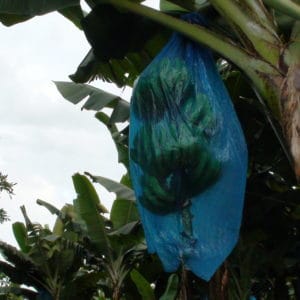
Over 16 million tonnes of bananas are exported worldwide each year, and the United States is the top importer. According to the U.S. Department of Agriculture (USDA), bananas are the most popular fresh fruit and the average American consumes over five kilograms (11.4 pounds) annually. However, the most common variety of banana, the Cavendish, is being wiped out in Asia by the fungal disease Tropical Race 4 (TR4) and in Africa by a bacterial disease called Xanthomonas wilt.
During college, Turner spent time living on a banana plantation and earned a dual degree in environmental and film studies. After working in television in Los Angeles, she returned to academia where she is currently working on a Masters in applied ecology at Imperial College London. Her documentary will examine issues with monoculture agriculture, human rights violations, and crop disease while presenting small-scale production solutions based on agroforestry and sustainable practices.
Food Tank had the opportunity to discuss issues facing bananas, including the production system and laborer concerns, with Jackie Turner.
Food Tank (FT): How would the extinction of the Cavendish effect people, including those who grow them?
Jackie Turner (JT): The safest answer I can give is that we don’t know how a crop extinction of this magnitude will impact people in different parts of this food system. We do know that millions rely on the banana industry, both directly and indirectly, as their main source of income. The good that may come out of it would be the release of thousands of acres of land, potentially, to be reacquired by local people for small-scale and more environmentally friendly agriculture. But after years of being doused with chemicals, the land may not recover quickly enough to provide for the livelihoods of those who would be farming this land. As for consumers, the disappearance of bananas may go nearly unnoticed. They aren’t crucial to our nutrition or survival, and the market is fluid enough that other food trends could likely fill that gap. But that’s the cynic in me talking. As a filmmaker, I hope that people realize we can still have this fruit in our lives. We just have to eat a lot less of it, change our expectations, and revise the system that delivers it to us.
FT: The Cavendish has dominated the international banana market for over 60 years. Why is it only now facing issues?
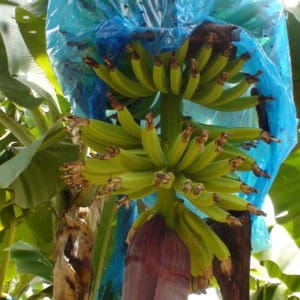
JT: I would argue that the Cavendish has always faced issues, as do most monoculture systems. For a very long time, the banana industry was able to stay ahead of the disease through improved hygiene and anti-contamination protocols that slowed the spread of Tropical Race 4 (TR4). Banana plantations have been using ever-increasing amounts of chemicals since the introduction of the Cavendish as its pests grow more and more resistant.
FT: Before the Cavendish’s rise, the Gros Michels was the most common banana variety, which declined due to the same problems faced by the Cavendish. Why didn’t banana producers learn from their mistakes?
JT: Banana producers will tell you that they learned a lot from the demise of the Gros Michel. As I mentioned earlier, the corporations were able to figure out new procedures to prevent contaminations across plantations. Gros Michel’s fall also coincided with a boom in the food industry where technology was being heralded as the driving force behind human progress. The deadly chemicals left over from World War I were conveniently adapted into agricultural tools.
FT: If the Cavendish are facing extinction, why not switch to a different variety of banana for mass production?
JT: Switching to a different variety is Plan A, according to researchers, who have been trying to develop new banana varieties for decades. Interestingly, the group you would think would be the most invested in this, the banana corporations, closed their banana variety laboratories in the 1980s citing chemical suppression of Cavendish’s enemies as the way forward. Private researchers are still trying to find that ideal banana variety, but it’s more complicated than it seems. Cavendish is ideal for mass production because of a variety of qualities. Essentially the entire banana industry, worth billions, has been planned around how long it takes Cavendish bananas to grow and ripen, as well as their size (banana packing boxes are made to cradle bunches of nearly exactly the same size).  A new variety must be resistant to TR4, resistant to bruising, grow relatively quickly, ripen slowly but not too slowly, appear appealing to consumers, and require the same or fewer workers and resources to produce, so banana executives can keep their bottom line intact. I will point out that taste is nowhere on that list.
FT: Bananas impact nutrition and diets around the world, but their production also has negative health effects on local laborers. What problems do banana workers face?
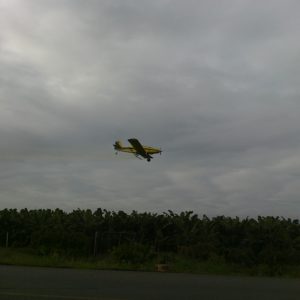
JT: There’s no question that banana laborers have been exploited, often to deadly ends. Twenty, thirty years ago, workers were applying some truly awful stuff, by hand, often with zero protection, to the banana plants. These awful chemicals—banned in the United States because they made workers in U.S. chemical plants sterile—continued to be used, even after many banana workers reported being sterile. Today, a group of workers from Nicaragua is involved in a lawsuit with Dole over their resulting health issues, but Dole has a lot more resources than workers in third world countries do. It’s hardly a fair fight. Today, the chemicals are supposedly safer, but I still met many men who wanted children but reluctantly told me they hadn’t been able to have them with their spouse. Maybe we won’t know the full effects of this round of chemicals for another twenty or thirty years? It seems like a huge risk to take. Today, banana workers still apply chemicals without protection and the crop-dusting planes drop chemicals sometimes three to four times a week on the plantations, Many workers’ homes sit right on the edge of those plantations, where the wind carries the chemicals onto their roofs.
FT: What are smallholder farmers doing differently that can save bananas and improve laborer health?
JT: There are smallholder farmers out there growing different varieties of bananas. Since diseases are often evolved to target one type of banana, this diversity helps protect these bananas from disease, which means growers can use far fewer chemicals. Bananas can also be grown in agroforestry systems, which can provide not only biodiversity, but agrobiodiversity and a diversity of income. Growers can grow fruit bearing trees like cacao in these systems, as well as larger timber trees to be harvested periodically over long periods of time.
FT: How can smallholder banana producers compete with large multi-national corporations and break into international markets with new banana varieties?
JT: This question is the core of our film, and I’ll admit we don’t yet have the whole answer. I think a lot of it will have to come down to changes in consumer expectation and demand. We’ve already seen extraordinary shifts in the food industry in the directions of organic and fair trade. Can we expect that consumers may one day want dehydrated date bananas? I hope the answer is yes.

Tuesday, December 5, 2017

As Boston Nears Plastic Bag Ban, Environmentalist Encourages RI Statewide Ban/NPR

This is a truly monumental moment as we see a major city, and a leader in sustainability, banning plastic bags (Yeah) and influencing a nearby state, RI.  Let's keep the momentum going.

\Johnathan Berard, state director of Clean Water Action, testifies during a hearing at the Statehouse in June 2017. Berard says Rhode Island should pass a statewide ban on plastic bags for environmental and economic reasons.

Boston is close to banning plastic bags after a unanimous city council vote Wednesday. Several Rhode Island municipalities have also banned the bags, but some advocates make the case for a statewide ban.

Plastic bags cannot be recycled curbside in Rhode Island, despite the recycle symbol printed on them.  Johnathan Berard, state director of the advocacy group Clean Water Action, said too many plastic bags are ending up in recycling loads anyway.
Berard said that's a problem because the loads cannot be processed when too many plastic bags are mixed in.  
“All of the good recyclable material that’s in the back of that truck now goes and gets put in with all of the rest of the municipal solid waste, and so you’ve got really good, valuable recyclable material that’s ending up in the landfill instead of being processed and sold," Berard said. 
Rhode Island’s largest landfill only has about 15 years left before its full.
Berard said because of that, it’s important to pass measures that incentivize the use of reusable bags.
Berard added when contaminated loads are sent to landfills, it costs cities and towns a fee of $39.50 per ton. Each year, that costs municipalities tens and hundreds of thousands of dollars, according to the Providence Journal. The Rhode Island Resource Recovery Corporation estimates that fee also costs households an extra $1.05 a month. 
Currently, Jamestown, Middletown, Newport and Barrington have passed restrictions on plastic bags.

Dynamic Catholic/Hope

For the Advent Season, along with Mathew Kelly, we bring you hope;  for you, your family, our planet, the world.


Monday, December 4, 2017

What was once hailed as first U.S. offshore wind farm is no more/Bloomberg

To us this is very sad news.  What a waste of a potentially great wind site not to get built as we see plans for Cape Wind dissipate.  A few years ago we did a full show exploring this story with one of the writers of a book chronicling the politics and stupidity surrounding Cape Wind's inability to get built.  Very frustrating.

As always greed, misinformation, self-interest obscured by gobs of money and weak government lead us to failure and lost promises.


  • Cape Wind project halts development efforts, cancels lease
  • Faced strong local opposition, lost power contracts in 2015
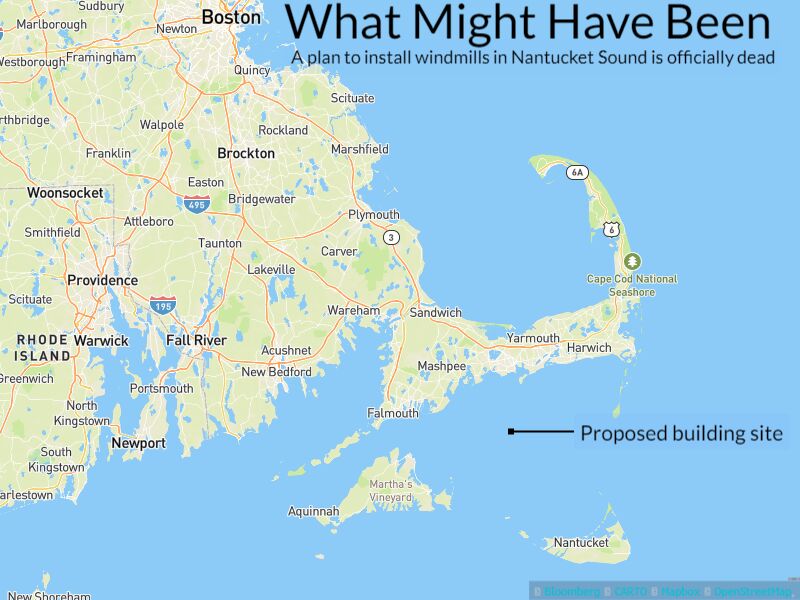
Cape Wind, the offshore wind project off the coast of Massachusetts that drew the ire of the Kennedy and Koch families, is officially dead.
Energy Management Inc. has ceased efforts to build what was once expected to become the first offshore wind farm in the U.S., according to an emailed statement from Chief Executive Officer Jim Gordon. The project’s Boston-based developer has already notified the U.S. Bureau of Ocean Energy Management that it has terminatsed the offshore wind development lease it received in 2010.
Cape Wind suffered a slow death. Efforts to develop the 468-megawatt offshore farm, proposed to supply power to Cape Cod and the islands of Martha’s Vineyard and Nantucket, began in 2001 but came up against relentless opposition from a mix of strange bedfellows including the Kennedy family and billionaire industrialist William Koch. While Energy Management won several court battles, the project couldn’t survive the 2015 cancellation of contracts to sell its power to local utilities.
“Jim Gordon really was a visionary,” Amy Grace, a New York-based analyst for Bloomberg New Energy Finance, said in an interview Friday. “He brought the project to the goal-post. He just faced a very vicious and very well-funded lobbying organization to protect Nantucket Sound.”

Insurmountable Opposition

Cape Wind, which called for as many as 130 turbines in Nantucket Sound, once appeared to be on the vanguard of clean energy in the U.S. The project had a federal lease to develop an area 5 miles (8 kilometers) off Cape Cod. Spread over 25 square miles known as Horseshoe Shoal, it could have generated enough electricity to power 200,000 homes, according to the U.S. Energy Department.
The $2.6 billion project also had backing from powerful players. Cape Wind had a conditional $150 million loan guarantee from the Energy Department. Mitsubishi UFJ Financial Group, Rabobank Group and Natixis SA agreed to lead a $400 million debt package. And Siemens AG was considering a $100 million equity investment.
In the end, however, opposition proved insurmountable. While environmental groups argued that it would reduce the region’s reliance on fossil fuel, critics -- including owners of local shore-front estates -- countered it would spoil views from Cape Cod and disrupt fishing areas.
Lawsuits piled up, delaying the project. Cape Wind missed a series of contractual milestones, prompting National Grid Plc and Northeast Utilities’ NSTAR unit to cancel power-purchase agreements in early 2015. At the time, analysts declared the project all but dead.
In the meantime, the offshore wind industry slowly began to take off in the U.S. Deepwater Wind LLC completed the first project in 2016, a 30-megawatt wind farm south of Block Island in Rhode Island waters. Norway’s Statoil ASA is planning one in New York, off the Long Island coast, and developers have proposed several other projects up and down the East Coast.
Several of the developers have said they learned a key lesson from Cape Wind: don’t try to build within sight of shore.

Saturday, December 2, 2017

Tesla's massive battery in Australia is ready for testing

Battery storage for energy is the new frontier:  Full of promise but still untested.  Tesla's risk of installing this massive system in Australia, no money upfront, is an alternative for delivering reliable power we have seen till today.  Great milestone.

As always Tesla and Elon Musk lead us down new roads of innovation and change.

Tesla's massive battery in Australia is ready for testing

Elon Musk promised to build the battery within 100 days or it would be free


The government of South Australia hopes Tesla's massive battery can help alleviate its energy issues.

The world's biggest battery is ready for testing in South Australia, with hopes it can help solve the energy problems plaguing that state.

Tesla's Elon Musk promised back in March to build the 100-megawatt lithium ion battery within 100 days of signing a contract with the South Australia government. Australian software billionaire Mike Cannon-Brookes promised to secure the funds and the approvals if Musk was serious.

South Australia was hit with a state-wide blackout in September 2016 that left 1.7 million residents without power, Australia's legendary summer heat waves brought further power problems this year, prompting a national debate about the country's energy mix. While Prime Minister Malcolm Turnbull has backed coal and other fossil fuel energy sources, some state governments have been pushing for more renewable energy like wind and solar.

In March, South Australia Premier Jay Weatherill announced a wide-reaching energy plan that included $150 million in funding for renewable energy projects, with the massive storage battery to be built by Tesla.

The Powerpack will store energy generated by the Hornsdale Wind Farm and deliver it to the grid when needed. It's an attempt to alleviate the state's unstable grid with a reliable source of backup energy drawn from sustainable sources.

Tesla says the Powerpack will be able to power 30,000 homes. With an energy capacity of 129 megawatt-hours, it could theoretically last about an hour and 20 minutes at 100 MW, before being recharged.

The countdown on Musk's 100-day promise started in September, when a grid-connection agreement was signed with transmission company Electranet — though the facility was half-built by then.

Weatherill announced Wednesday that installation was complete — ahead of schedule — and testing will begin to ensure the Powerpack meets regulatory requirements, with the goal of being fully online by December 1, just in time for summer.

It's estimated the project cost $50 million.

Friday, December 1, 2017

Atlanta City Council Passes Ordinance to Make it Easier for Future Home and Business Owners to Install Electric Vehicle Charging Stations/Sierra Club

We've seen examples of good and bad government policy.  Here, in Atlanta, we see a positive change for promoting EV's.

Atlanta, GA -- Yesterday, the Atlanta City Council passed ordinance 17-0-1654, which will require all new residential homes and public parking facilities to install the wiring to accommodate the possibility of electric vehicle (EV) charging stations. The ordinance requires that 20 percent of the spaces in all new commercial and multi-family parking structures and all new residential homes be EV-ready to make it easier for future residents to install EV charging stations.
In response, Sierra Club Georgia Chapter Director Ted Terry released the following statement:
"The Sierra Club applauds the Atlanta City Council for passing this ordinance. By making it easier for owners of homes and businesses to install EV charging infrastructure, it will be easier than ever for Georgians to plug in and drive away dangerous climate pollution.”
 
About the Sierra Club
The Sierra Club is America’s largest and most influential grassroots environmental organization, with more than 3 million members and supporters. In addition to helping people from all backgrounds explore nature and our outdoor heritage, the Sierra Club works to promote clean energy, safeguard the health of our communities, protect wildlife, and preserve our remaining wild places through grassroots activism, public education, lobbying, and legal action. For more information, visit www.sierraclub.org.