Monday, May 7, 2018

Department of Energy Announces $34 Million for Innovation Building Technologies Research and Development/RNN

Over the years we've interviewed many reps from the USDOE and their investment in renewables, efficiency, building out a new way of delivering clean energy across the US has been key in our ability to migrate from fossil fuel.  Here they attack the energy future through building improvements.


The U.S. Department of Energy (DOE) announced up to $34.5 million in funding to support building technology research and development (R&D). Buildings are the single largest energy-consuming sector in the U.S. economy, representing approximately 75% of the nation’s electricity use and 40% of its total energy demand, resulting in Americans spending nearly $400 billion each year to power homes, offices, schools, hospitals, and other commercial and residential buildings.
The Energy Department’s Building Technologies Office (BTO) is issuing two funding opportunities: Buildings Energy Efficiency Frontiers & Innovation Technologies (BENEFIT) 2018 and Solid-State Lighting Research. These funding announcements will further the Administration’s goal to drive U.S. technology leadership in solid-state lighting as well as develop innovative energy saving technologies, systems, tools, and models that could lead to significant reduction in building energy consumption by supporting innovative research in several topic areas.
BENEFIT 2018 will fund up to $19.5 million for approximately 15-25 cost-shared projects focused on early-stage R&D to enable the development of novel technologies that can improve efficiency, reduce the energy costs of the nation’s buildings, and facilitate interaction with the electricity grid. Under this funding opportunity, BTO is interested in six topic areas:
  • Topic 1 – Advanced Separation Technologies for Building Energy Efficiency
    Development of Innovative separation technologies, such as membranes and ad/ab-sorption technologies, capable of significantly improving building energy efficiency in HVAC, water heating and appliances, and building envelope applications.
  • Topic 2 – Advanced Building Materials
    Development of smart, tunable, and highly insulating building envelope materials to enable significant reductions in cooling and heating loads.
  • Topic 3 – High-Performance Windows
    Development of highly insulating R7 to R10 window technologies, as well as advanced coatings for dynamic glazing.
  • Topic 4 – Novel Approaches for Cyber-physical Systems in Buildings
    New and enhanced synergies at the nexus of building energy modeling and Sensors and Controls that together cover portions of the building cyber-physical space.
  • Topic 5 – Integration Research of Advanced Commercial Energy Efficiency Packages
    Testing of next-generation building systems and equipment that improve efficiency across two or more building end uses in real-world operating conditions.
  • Topic 6 – Advancements in Natural Gas and Other Fuel-driven Equipment
    Innovative solutions that significantly improve the energy efficiency of natural gas and other fuel-driven equipment and achieve a coefficient of performance of greater than 1.0.
Concept papers for BENEFIT are due no later than June 8, 2018 and full applications are due August 23, 2018. BTO will host a webinar for this funding opportunity on May 8, 2018 (register here)....
MORE AT RENEWABLE NOW.com

Go Green & Get Green for Earth Day: 5 Tips to Turn Closet Clutter into Cash/RNN

Shop consignment and save the planet in honor of Earth Day. The family that owns Michael’s Consignment Shop in NYC has been in the business of recycling for over a century – long before it was in vogue. Consignment, as a business model, focuses on recycling. “When you “Drop and Shop” at Michael’s, you are realizing the full sequence of recycling clothing all in one visit,” said Tammy Fluhr-Gates, Co-Owner of Michael’s. “It’s sustainability at its best.”
Fluhr-Gates’ great, great grandfather discovered the recycling benefit of the consignment model when, as a tailor in the late 1800’s, he refused to toss the clothing that many of his clients abandoned in his shop. Instead of throwing them away, he started the family consignment business in 1902 on the Lower East Side of Manhattan believing that “past treasures should be rediscovered by others.” It was this mindset that allowed the family business to continue and prosper for over 100 years.
“Earth Day 2018 is an opportunity to take an active role in recycling your clothing,” said Tammy Fluhr-Gates. “My family pioneered the consignment business ten decades ago with a passion for being responsible and, today we are proud to uphold the same sustainable practices.”
Michael’s experts will assist you with tips on how to consign your clothing and how to make the task less daunting. “Earth Day is not only an opportunity to protect the earth and our landfills, you may repurpose your clothing, clean out your closet, declutter your life, commit to a seasonal practice and make cash while doing it,” said Tammy.
Michael’s will find new homes and owners for your current designer treasures.  Spring is one of the busiest times of the year for consignment as it is when customers clean out closets. When you consign with Michael’s, you will receive 50% of the selling price to be paid by check, used as a store credit or, Michael’s can donate to the charity of your choice.  As a commitment to regular consignors, Michael’s offers estate liquidation assistance in NYC and in the surrounding areas. Michael’s team can help assess, remove, and monetize high-end luxury apparel and accessories in your home. Learn about 5 essential items you truly need in your closet.
5 Tips to Turn Closet Clutter into Cash
  1. SORT items into color and categories so you can see just how many black dresses you have.
  2. EDIT!  If you didn’t wear it all year, pull it out of your closet. You’ll find you wear more of your wardrobe, jewelry and shoes when you can visually see them.
  3. ORGANIZE your pulled items into three categories: swap, donate or consign.
  4. SWAP! Hold a swap party with friends.
  5. SELL/DONATE: Bring items marked for donation and consignment to the place that makes the most sense for that piece (and, that will give you the best value!)

Saturday, May 5, 2018

Cuomo Promises a Dunkirk-Style Citizens' Fleet to Block Drilling/Bloomberg

Good to see government leadership with a heart and courage:


  • Democrat says he’ll commission fishing vessels, leisure boats
  •  
    A potential 2020 candidate, Cuomo gives campaign-like speech

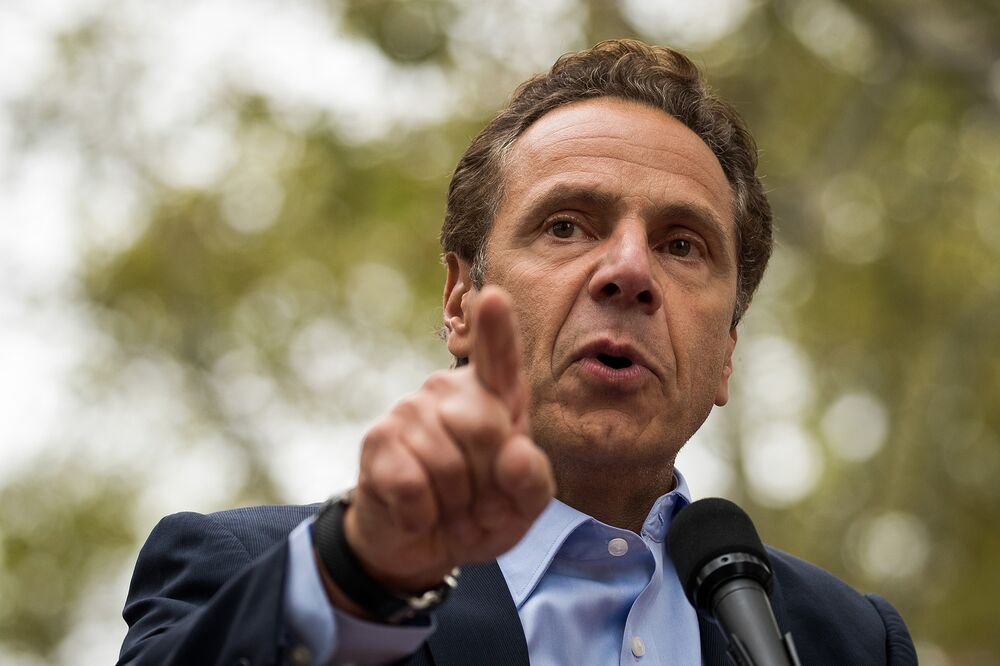
New York Governor Andrew Cuomo vowed to enlist a “citizens fleet” of leisure boats and fishing vessels to block any attempt to construct oil-drilling facilities off the state’s shores, as part of a broad attack on President Donald Trump’s environmental and energy policies.
“I’m going to commission a citizen fleet to stop it just as Winston Churchill did at Dunkirk,” Cuomo said, invoking the former British prime minister’s call for a seaborne operation of fishing boats and leisure vessels to rescue evacuating soldiers from the French shore line. He called Trump’s decision to permit offshore drilling “an unacceptable risk.”
“The only way you stop a bully is by standing up and putting your finger in his or her chest,” Cuomo, 60, said during a campaign-style speech in Lower Manhattan’s Battery Park.
The governor, who’s seeking a third term and faces a Democratic primary challenge from self-described progressive and actress Cynthia Nixon, has also been mentioned as a potential 2020 White House candidate. He used the speech to deliver a broader attack against Trump and the Republican Party’s economic, environmental and social policies.
“They’ve attacked a woman’s right to choose; they’ve attacked immigration policy; they’re against diversity; they’re against the LGBT community; they’re against individual rights,” Cuomo said. “They’re against everything we hold dear.”
Cuomo touted a state-subsidized solar-panel manufacturing plant in Buffalo, which he said would be the largest in the U.S., as an example of economic-development measures to support renewable energy. He mocked Trump’s promises to return to the country’s dependence on coal and fossil fuels.
“We’re going to go back to fossil fuels, we’re going back to coal, we’re going to set up big manufacturing plants again,” Cuomo said. “You don’t politically assuage people’s anxiety by saying ‘don’t worry, I’m bringing back the old days, when you worked in the steel plant and you worked in the aluminum plant.’ The old days are gone; that’s why they’re the old days.”
The Trump administration policy, which would open 90 percent of U.S. offshore oil reserves to private development, has attracted bipartisan opposition from most of the governors of the 22 coastal states it would affect.

Friday, May 4, 2018

FarmLogix Launches Local Farm Boxes in Communities Across Chicago/RNN

More local is better.  Nice innovation here.  More than ever I want to go back to Chicago.


n an effort to increase access to fresh and healthy foods in communities across ChicagoFarmLogix, a leading provider of local and sustainable food technology solutions to institutional customers, is proud to announce the launch of its Farm to Community boxes. FarmLogix’s Farm to Community boxes were made possible by funding Team Leverage, a collaboration between FarmLogix, This Old Farm and Top Box Foods, after winning The Food to Market Challenge, a supply chain competition sponsored by Kinship Foundation’s Food:Land:Opportunity and funded by the Searle Funds at Chicago Community Trust.
With Aramark Chicago Public Schools and North Shore Hospital Systems as participating locations, the Farm to Community boxes are available for pickup at Roberto Clemente, Juarez and Dunbar Vocational high schools, as well as North Shore’s EvanstonHighland ParkSkokie and Glenbrook locations. “Schools and hospitals allow us to reach a wide network of community members and bring fresh and local food directly to them,” said Linda Mallers, Founder and CEO of FarmLogix. “Being able to pick up fresh, local and healthy food on your way home from school or work provides the convenience that helps grow healthier communities.”
Every week, families, employees, surrounding businesses and the community are able to purchase affordable source-identified produce, meats and side dish boxes that support local farmers, with the meat sourced from Indiana and the produce sourced from Michigan. All boxes include farm profiles, nutritional content, and recipes using the box contents. Most boxes support quick, easy meals such as slow cooked pork fajitas, pot roast and chili. Link and Snap are accepted at the Chicago Public School pick-up locations.
MORE AT: www.renewablenownetwork.com/farmlogix-launches-local-farm-boxes-in-communities-across-chicago/

Thursday, May 3, 2018

AU is the First University in the U.S. to Reach Carbon Neutral Status/RNN

Great milestone, great news.  See more on our main network site:


President Sylvia M. Burwell announced that American University has achieved carbon neutrality, which means it has a net zero carbon footprint. AU publicly pledged to become carbon neutral by 2020 back in 2010. Now because of the commitment, leadership, and innovative strategic planning of its staff, faculty, and students, AU has reached its goal two years early. AU becomes not only the first carbon neutral university in the nation, but it is also the first urban campus and the first research university to accomplish this important achievement. AU has met the guidelines set by Second Nature, a nonprofit dedicated to accelerating climate action in and through higher education, to become a carbon neutral university.
“Our community joined together to accomplish this important goal established in 2010,” said President Burwell. “We wanted to demonstrate leadership and innovation in addressing the serious social, economic, and environmental issues associated with global warming. Having a net zero carbon footprint reflects our commitment to acting on our values and leading into the future.”

Wednesday, May 2, 2018

For Today's Show/Recycle everything with TerraCycle

Join us live at 1p, ET as we interview Tom Szaky, Founder/CEO of this remarkable group.

Free recycling programs

What is TerraCycle?

TerraCycle is Eliminating the Idea of Waste® by recycling the "non-recyclable." Whether it's coffee capsules from your home, pens from a school, or plastic gloves from a manufacturing facility, TerraCycle can collect and recycle almost any form of waste. We partner with individual collectors such as yourself, as well as major consumer product companies, retailers, manufacturers, municipalities, and small businesses across 20 different countries. With your help, we are able to divert millions of pounds of waste from landfills and incinerators each month.


Tuesday, May 1, 2018

Carbon capture could be a financial opportunity for US biofuels/Science Daily

At RNN we are always on the hunt for financial opportunities arising out of problem solving.  Today we are faced with historic challenges.  But, we are blessed with incredible, historic moments of innovation and new economic growth.

Carbon capture is the brave new world along with energy storage, smart city, smart grids and the sprouting, all around us, of the digital economy.  Everyone of these engineering feats can potentially lead us down whole new roads.  Roads, potentially, paved in gold.

Tomorrow our radio show highlights the incredible contribution made to waste reduction and high recycling rates by TerraCycle.  Perhaps next year our cameras will turn on the entrepreneur who brings better carbon reduction to the marketplace.

Although considered critical to avoiding catastrophic global warming, the feasibility of removing carbon dioxide from the atmosphere and storing it underground -- known as negative emissions -- has been in question.
"There's really no scenario that meets the world's climate goals without negative emissions," said Katharine Mach, a senior research scientist at Stanford's School of Earth, Energy and Environmental Sciences. "But most technologies for carbon removal are immature, largely unavailable or expensive."
But researchers at Stanford and other institutions have found new hope for cost-effective carbon capture and sequestration (CCS). Their study, published April 23 in Proceedings of the National Academy of Sciences, runs the numbers on different options for removing carbon dioxide from the atmosphere in the U.S. and finds opportunities where it is not only commercially feasible with existing technology, but profitable.
Plants do the work
The most widely discussed strategy for removing carbon dioxide from the atmosphere involves growing plants, which absorb CO2, as a first step. Those plants can then be processed to produce energy, and any resulting CO2 emissions from that energy production would be captured and stored underground.
While it seems straightforward, these technologies -- known as bioenergy with carbon capture and sequestration, or BECCS -- have not been fully developed and many areas don't have geology that's suitable for storing CO2. What's more, pipelines would need to be built to take CO2 from bioenergy plants to areas suitable for storage. There are also serious questions about how BECCS would scale globally and compete with plants grown for food production or impact ecosystems and biodiversity.
However, the group found that one type of BECCS technology could work immediately for U.S. ethanol producers. What's more, given current and predicted future financial incentives, the approach could even turn a profit.
"We found that between tax credits for CCS and upcoming financial incentives from low-carbon fuel standards, CCS is an untapped financial opportunity for ethanol producers across the U.S.," said Daniel Sanchez, a postdoctoral scholar with the Carnegie Institution for Science and lead author on the paper.
The United States is the largest producer of ethanol in the world, producing 15.8 billion gallons in 2017. Ethanol is made by fermenting biomass such as corn, which produces a high-purity CO2 by-product that is easier and cheaper to capture, compress and inject underground than other emitted sources of CO2. Right now, these emissions are largely vented to the atmosphere in the process of making ethanol.
"Negative emissions at biorefineries is commercially ready and affordable. It offers a compelling way to build the real-world experience we need to develop future BECCS technologies," said Mach.
Financial incentives
The researchers estimate that 60 percent of all CO2 emitted annually through the production of ethanol at the country's 216 biofuel plants (about 1 percent of all CO2 emissions from the U.S.) could be captured at low cost, under $25 per metric ton of CO2.
Further, if credits for captured CO2 were set at $60 per metric ton, it could incentivize sequestration of 30 million metric tons of CO2each year that are otherwise vented into the atmosphere -- equivalent to emissions from powering 3.2 million homes for one year -- and pay for the construction of 4,300 miles of pipeline infrastructure needed to transport the CO2 for storage at appropriate sites across the country.
These incentives are in line with new tax credits included in the Bipartisan Budget Act of 2018 signed by the president in February. The bill amended section 45Q of the tax code so that power plants or CO2-emitting facilities are eligible for tax credits for captured CO2 for up to 12 years.
"There are many ways to incentivize and unleash negative emissions technologies, one of which this administration and Congress may have just put into place," said Mach.
Another financial incentive comes in the form of low-carbon fuel standards, such as those implemented in Oregon, California and British Columbia. It works by giving tradeable credits for fuels that exceed the standard and deficits to those who don't.
Right now, accounting for CCS isn't included in the standards, but on April 27, California will consider updating its rules to include new protocols that would quantify the value of carbon removal in the fuel production process. If adopted, fuel producers could collect more credits by selling lower-carbon ethanol in California.
"This is an opportunity not only for biofuel producers to make profits, but also for CCS technology to be more widely piloted and developed. This is an essential first step if we're going to deploy carbon removal at levels necessary to keep dangerous climate change in check," said Sanchez.
Story Source:
Materials provided by Stanford UniversityNote: Content may be edited for style and length.