Thursday, June 25, 2015

The Way Humans Get Electricity Is About to Change Forever/Bloomberg

We've been waiting a long time for this confirmation of our position, articulated for 3 years now, that we are living the next great industrial revolution as mankind migrates from a fossil-fuel economy to one powered by clean energy.  It is a great, wonderful time to be alive.

The economics drive this transformation as renewables spiral down in costs, and add storage capability so they are not intermittent, and fossil fuel gets more expensive as government taxes, levies its use.  Efficiency is the wild card as it drives down the use of electricity even in a virtual world.

We fully agree with Bloomberg.  All the R & D money we see is getting invested in change...transformation...building a new, green economy.  People are excited.  They can't wait to jump in and share the financial gain.  Innovation is cascading into all industries, including utility companies, autos, food, education, military forces, satellites, ocean management, and, one of the very first industries, religion and faith.  Of course, the financial markets are rapidly shifting their cash into ESG champions of commerce.

Hallelujah.

 The renewable-energy boom is here. Trillions of dollars will be invested over the next 25 years, driving some of the most profound changes yet in how humans get their electricity. That's according to a new forecast by Bloomberg New Energy Finance that plots out global power markets to 2040. 
Here are six massive shifts coming soon to power markets near you:

1. Solar Prices Keep Crashing

The price of solar power will continue to fall, until it becomes the cheapest form of power in a rapidly expanding number of national markets. By 2026, utility-scale solar will be competitive for the majority of the world, according to BNEF. The lifetime cost of a photovoltaic solar-power plant will drop by almost half over the next 25 years, even as the prices of fossil fuels creep higher.
Solar power will eventually get so cheap that it will outcompete new fossil-fuel plants and even start to supplant some existing coal and gas plants, potentially stranding billions in fossil-fuel infrastructure. The industrial age was built on coal. The next 25 years will be the end of its dominance.  

2. Solar Billions Become Solar Trillions

With solar power so cheap, investments will surge. Expect $3.7 trillion in solar investments between now and 2040, according to BNEF. Solar alone will account for more than a third of new power capacity worldwide. Here's how that looks on a chart, with solar appropriately dressed in yellow and fossil fuels in pernicious gray:  


Electricity capacity additions, in gigawatts
 
Source: BNEF


3. The Revolution Will Be Decentralized 

The biggest solar revolution will take place on rooftops. High electricity prices and cheap residential battery storage will make small-scale rooftop solar ever more attractive, driving a 17-fold increase in installations. By 2040, rooftop solar will be cheaper than electricity from the grid in every major economy, and almost 13 percent of electricity worldwide will be generated from small-scale solar systems. 

$2.2 Trillion Goes to Rooftops by 2040


4. Global Demand Slows

Yes, the world is inundated with mobile phones, flat screen TVs, and air conditioners. But growth in demand for electricity is slowing. The reason: efficiency. To cram huge amounts of processing power into pocket-sized gadgets, engineers have had to focus on how to keep those gadgets from overheating. That's meant huge advances in energy efficiency. Switching to an LED light bulb, for example, can reduce electricity consumption by more than 80 percent. 
So even as people rise from poverty to middle class faster than ever, BNEF predicts that global electricity consumption will remain relatively flat. In the next 25 years, global demand will grow about 1.8 percent a year, compared with 3 percent a year from 1990 to 2012. In wealthy OECD countries, power demand will actually decline.  
This watercolor chart compares economic growth to energy efficiency. Each color represents a country or region. As economies get richer, growth requires less power. 

The Beauty of Efficiency


5. Natural Gas Burns Briefly

Natural gas won't become the oft-idealized "bridge fuel" that transitions the world from coal to renewable energy, according to BNEF. The U.S. fracking boom will help bring global prices down some, but few countries outside the U.S. will replace coal plants with natural gas. Instead, developing countries will often opt for some combination of coal, gas, and renewables.  
Even in the fracking-rich U.S., wind power will be cheaper than building new gas plants by 2023, and utility-scale solar will be cheaper than gas by 2036.
Fossil fuels aren't going to suddenly disappear. They'll retain a 44 percent share of total electricity generation in 2040 (down from two thirds today), much of which will come from legacy plants that are cheaper to run than shut down. Developing countries will be responsible for 99 percent of new coal plants and 86 percent of new gas-fired plants between now and 2040, according to BNEF. Coal is clearly on its way out, but in developing countries that need to add capacity quickly, coal-power additions will be roughly equivalent to utility-scale solar. 


6. The Climate Is Still Screwed

The shift to renewables is happening shockingly fast, but not fast enough to prevent perilous levels of global warming.
About $8 trillion, or two thirds of the world's spending on new power capacity over the next 25 years, will go toward renewables. Still, without additional policy action by governments, global carbon dioxide emissions from the power sector will continue to rise until 2029 and will remain 13 percent higher than today's pollution levels in 2040.
That's not enough to prevent the surface of the Earth from heating more than 2 degrees Celsius, according to BNEF. That's considered the point-of-no-return for some worst consequences of climate change. 

Why Food Sustainability Matters

Does this strike you as almost a rhetorical question?  Should common sense tell us we need to care deeply about food sustainability?  Yes.

Knowledge, though, is power.  Our network is dedicated to education.  Intuitively understanding the importance of the purity of our food supply is very different than buying smart in grocery stores (or, better yet, food co-ops).   This article does a great job of outlining steps to becoming a smart consumer.

Pope Francis makes clear the burden on us to live sustainable.  Supporting a healthy agricultural/farming system is a great place to start.

Why Food Sustainability Matters and 10 Things You Can Do About It

Most of the food found in the grocery store is the product of an unsustainable food system.
This food is dependent on foreign oil, is destroying soil, contaminates water, has caused disease outbreaks, and may be robbing our grandchildren of the ability to grow food at all.
It is often said that consumers hold a lot of power, but I believe that to stop being a consumer is even more powerful. Choosing not to support the industrial food system is the beginning of sustainable eating.
So what is sustainable eating and how do you do it?

Why Food Sustainability Matters and What You Can Do

The more I learn about our food system and how it came to be, the more concerned I am for our children and grandchildren.

Growing Concerns:

  • Animal products are increasingly raised purely for profit, without regard to proper stewardship or health.
  • We are monocropping, and the government is subsidizing it.
  • Food is transported and processed using large amounts of non-renewable resources.
  • Food is being genetically modified, cloned, and patented.
The problem is that we are separated from the origins of our food. So while we may realize that buying organic is important, organic is now just as industrialized as conventional foods.

You may wonder what little old you can do about all of this.
More than you think.

Vote With Your Food Dollars

What if every time you made a food purchase you could make a difference? Every dollar spent at a farmer’s market is one less dollar supporting the industrialized food system. Every piece of food grown in your own backyard becomes a symbol of freedom.

The moms who feed their families have more power than they know.

What Sustainable Eating Looks Like

We have all been told to “read labels” when we’re choosing our foods. That’s not bad advice, but most sustainable foods do not have labels.

Sustainable foods don’t need labels because they…

  • are real foods that our bodies were designed to eat.
  • are healthy for us, the soil, and the animals.
  • do not harm the environment.
  • are humane for both the workers and the animals.
  • provide a fair wage to the farmer without the use of government subsidies.
  • support the local economy instead of large corporations.
Sustainable food is what people ate for thousands of years, up until 20th century.

10 Tips For Sustainable Eating

My journey to sustainable eating hasn’t been easy, and it certainly isn’t over. Here are ten steps that we have taken to become mindful eaters.

1. Learn to Cook.

Without basic cooking knowledge, none of this is possible. Learning to cook your favorite foods using local ingredients can really make all the difference.

2. Eat Locally.

If you care about delicious food, health eating, proper stewardship of the planet, and supporting your local economy then you must source out local ingredients.

3. Eat Seasonally.

This goes hand-in-hand with eating locally. Eat root vegetables and hearty greens in the fall and winter. Eat salads, fruit, and tomatoes in the summer. Even milk and eggs are more abundant during certain times of the year.

4. Preserve the Harvest.

If you eat locally or seasonally then you’ll have to learn to preserve the harvest. Try canning, dehydrating, freezing, and lacto-fermentation. Look to Simple Bites for a helpful how-to series later in the season.


5. Grow Something… Anything.

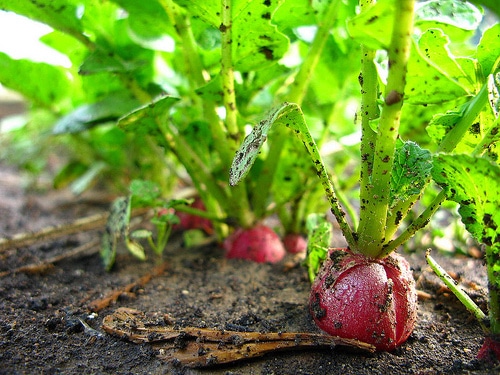
Start with herbs or lettuce. Radishes are really fast and fairly simple. Even if you rent you can create a container garden. Once you catch the gardening bug you will just want to grow more. Simple Organic had a great article for beginning gardeners.

6. Give Up Store Bought Convenience Foods and Make Your Own.

You can make your own taco seasoning, yogurt, chicken stock, pesto, granola, tomato sauce… the list goes on and on. If you buy it from the store, do a quick recipe search and try making it at home.

7. Buy Fair-Trade.

When you don’t know your farmer because you’re buying from a foreign country look for the words “Fair-Trade”. TransFair USA ensures that farmers are treated justly and paid fairly for their work.

8. Know The Cost of Cheap Food.

Do you ever wonder why some supermarket food is just so cheap? You may not pay for it at the cash register, but the cost to your health, the soil, and the environment are there. I rambled about the cost of a nourishing diet not once, but twice. It really is important.

9. Eat Animal Products.

I know this may be controversial, but locally grown animal products can be more sustainable than those grains and beans from the bulk bins. I have seen the “organic” bins be filled with bags from China. I know that not everyone feels the same way, but it is my personal belief that locally, biodynamically raised animal products are a better choice than monocropped grains and beans.

10. Be Willing To Give Up Convenience.

This may be the hardest part of changing the way you eat. On the other hand, it forces you to simplify your food in a way that promotes health and flavor. The simple truth is sustainable food does not outsource it’s preparation.

Eating mindfully may take a bit more effort, but the rewards – for your family and their future – are too big to pass up.

Need & Greed, The Takeaway from Pope Francis' Encyclical

We will continue to follow the Pope's new message on our personal responsibility to consume less and respect our environment more.  Focusing the emphasis, the burden on each of us individually, cuts off some of the hyperbole surrounding arguments around "climate change".  It puts the onus right where it belongs.

As the light passes on you and your family, are you an asset or liability in building a cleaner, brighter future?  See more this week at Renewable Now.biz.  Also, go directly to our site to access the video which is not embedded below but reflected in the story.


As a follow-up to Pope Francis’ encyclical Laudato Si’, ReNewable Now looked around the web for reaction and thoughts from opinion leaders on what they walked away with after hearing the address. We came across an interesting video from Father Robert Barron, and comments from Professor Ian Gough of the London School of Economics that we would like to share.

Professor Ian Gough
Pope Francis’s encyclical “on care for our common home” introduces two terms buried by modern economics: “need” and “greed”. These represent two opposing worldviews. One seeks to satisfy our wants or preferences, which are limitless, non-satiable, substitutable and amoral. The other prioritises meeting universal human needs, which are limited, sufficient, non-substitutable and with clear ethical grounding. By counterposing these and putting them centre-stage, he has clarified the egregious moral dilemma inherent in climate change in a way that can unite both religion and humanism.

The pope also takes issue with the arguments of green growth, which is the current dominant strategy to handle climate change. Yes, we must support the fastest possible decarbonisation of the global economy through eco-efficiency, as Nicholas Stern persuasively argues in his new book, but at some point, very soon, we will need to switch to post-growth strategies.

This revolutionary encyclical challenges both current ethics and economics.

Father Robert Barron on Pope Francis'
Encyclical "Laudato Si"


It seems no matter where you stand on this, the Pope is going in the right direction and we appreciate his willingness to take a leadership role in this very important time in our history.
- See more at: http://renewablenow.biz/renewable-living.html#sthash.0C5xHtNF.dpuf

Wednesday, June 24, 2015

World Environment Center Updates Gold Medal Criteria to Reflect Advances in Corporate Sustainability

What is the Environmental Center and what does a gold standard look like for companies?  How does such a rating system help society's overall push to cleaner levels?

Good questions, same ones we were asking.  So, we've posted their release below and will get them on the radio so we can chat more in depth.  It is great to see corporations pushing along audited standards of green.  Perhaps some day our lives will be equally judged.


PRESS RELEASE
Tuesday, June 23, 2015 - 4:25pm
June 23, 2015 /3BL Media/ - The World Environment Center (WEC) announced today updated criteria for its Gold Medal for International Corporate Achievement in Sustainable Development to reflect advances in corporate sustainability. The new criteria raise the bar for companies seeking to demonstrate success in sustainability leadership and address the following issues: 1) corporate sustainability commitment in governance, strategy, operations and products; 2) industry innovation; and 3) international sustainability leadership. Companies applying for the Award for 2016 will use these updated criteria and will need to present results achieved.

WEC’s Gold Medal Award, first instituted in 1985, is the longest standing and most prestigious independent sustainability honor in the world. This annual award results from a competition among global companies to demonstrate their leadership, commitment and demonstration of results to the practice of sustainable development. Companies submit applications to an independent Gold Medal Jury that consists of sustainability experts from academia, non-profit organizations and former business executives. The criteria were last updated in 2005.

Given the rapid changes in corporate sustainability during this time, the Gold Medal Jury conducted an assessment of sustainability trends as well as a review of other leading awards. The Jury also sought input from other global sustainability experts to update the criteria.

In describing the rationale for the updated criteria, Katherine Sierra, Chair of the Gold Medal Jury and Senior Fellow at The Brookings Institution, noted that “recent years have seen tremendous advances in the ways that leading companies are integrating sustainability more fully into their strategies and operations, and increasingly working to effect change at the national, regional and global levels.  By updating the award criteria, the Jury is reflecting the expectation that corporations seeking to be recognized as sustainability leaders invest in meeting emerging global challenges and opportunities.”

Further information on the full criteria can be found on the Gold Medal Application page and in the Gold Medal Frequently Asked Questions.

About the World Environment Center
The World Environment Center, headquartered in Washington, D.C., with offices and operations in emerging and developed markets, is unique in its direct application of sustainable development strategies and practices to the business operations of global companies. WEC creates sustainable business solutions through individual projects in emerging markets; convenes leadership roundtables to shape strategic thinking across a range of sustainability topics with a specific focus on the preparation of business leaders to implement sustainability; and honors industry excellence through its annual Gold Medal Award. An independent non-profit organization, WEC conducts no advocacy activities.

Hotels Embrace Sustainability

Our team travels regularly to cover events, do remote broadcast, support affiliates around the world, and we have been advocating for higher green standards for hotels.  When you consider the many elements of sustainability they touch--from chemicals used to wash and clean, to lighting systems, potentially using local, organic food in their meals and use of renewable energy, they become mini hubs of innovation and efficiency if they retool.

Next time you travel, please give a priority to those hotels who set and maintain high eco-friendly standards, and support those programs while there.

Hotels Embrace Sustainability to Lure Guests and Cut Costs


Donny Parrella, left, assistant director of engineering at the Fairmont hotel in Washington and a beekeeper, has added hives to the roof. Credit Zach Gibson/The New York Times

During his three-night stay, he dispensed with housekeeping.
“I don’t need my bed made every day and can certainly use the same towel three mornings in a row,” he wrote in an email.
Dr. Gitlow was rewarded for his green efforts with 500 Starwood Preferred Guest loyalty points for each night of his stay. Had he not chosen points, he also had the option of receiving a $5 voucher for food.
The program, called Make a Green Choice, allows all guests, not just frequent travelers, to opt out of housekeeping. According to Starwood Hotels and Resorts, approximately 6.4 million guests have participated since 2009.
As the drought in California and the Western states draws increased attention to conservation, hotels are turning to sustainability as a way of both attracting guests and cutting costs.


Hotels have three reasons to pay attention to conservation, according to Steve Jennings, lead consultant for hotels and resorts in the United States at Deloitte: corporate sustainability; better expense management; and consumer interest. A 2013 study by TripAdvisor found that 79 percent of travelers placed an importance on properties that use environmentally minded practices.   


The bees’ honey is also a key ingredient in a house cocktail, the Beetini, made with lemon, honey, honey comb, vodka and tequila. Credit Zach Gibson/The New York Times

Another report released in March by the Cornell University School of Hotel Administration showed that while guests were willing to participate in hotel sustainability practices, a greater number of guests join in when hotels offer different types of incentives, which may be charitable or financial.
Those who participate in green programs are generally more satisfied with their stay, according to Rohit Verma, a Cornell University professor who has studied hotel sustainability.
As a result, hotels here and abroad are introducing or augmenting farm-to-table cuisine in restaurants to lower their carbon footprint, providing charging stations for electric vehicles and using kitchen scraps for compost and even recycling cooking oil for experimental biodiesel fuel.
Behind the scenes, hotels are installing energy-efficient light bulbs and digital thermostats and are using recycled water for landscaping. They also are displaying discreet cards in guest rooms about the energy saved by not changing sheets and towels daily.
But they stop short of dictating to guests how to conserve. For example, hotels draw the line at advising guests to take shorter showers.
“Guests typically do whatever they do in their home environment,” said Denise Naguib, vice president for sustainability and supplier diversity at Marriott International.
For the most part, hotels’ green programs are similar across brands.
“The nature of hotel operations make it difficult to really have a significantly superior practice,” said Bjorn Hanson, a professor at the Preston Robert Tisch Center for Hospitality and Tourism at New York University.
Still, like the Starwood loyalty points, some hotel programs are intended to appeal directly to guests.


A loaf of the Fairmont's honey walnut bread, sweetened with honey from the Washington hotel's rooftop beehive. Credit Zach Gibson/The New York Times

Following the lead of the Fairmont Royal York in Toronto, the Fairmont Washington, D.C., in Georgetown is constructing a home for bees. A 13-foot structure with two large planter boxes and root balls is being built by Donny Parrella, assistant director of engineering at the hotel and a beekeeper. It will house 50 mason bees that will join 100,000 Italian honeybees already in residence since 2009. “It looks like nature,” Mr. Parrella said.
The hotel, concerned with the problem of disappearing bees, uses the insects as an educational tool for local students. And the hotel bakers make honey walnut bread that appears on the hotel menu. The bees’ honey is also a key ingredient in a house cocktail, the Beetini, made with lemon, honey, honey comb, vodka and tequila.
At the Westin Peachtree Plaza, where Dr. Gitlow stayed, groups are offered behind-the-scenes tours to learn about hotel sustainability. Sites include the kitchen, loading dock and laundry. The hotel has conducted seven tours since the beginning of the year.
It held an initial tour in 2013 during the annual conference of the American Society of Association Executives. Kristin Clarke, director of social responsibility for the trade association based in Washington, led the tour as well as a similar one a year earlier at the Omni Dallas Hotel.
She said that the tour made a vivid impression on attendees, who plan conferences for their own trade and nonprofit associations. “When they see 150,000 pounds of laundry, they understand the impact of linen reuse programs,” she said, referring to an average load.
During the tours she asks guests environmental trivia questions. One example: What are the three R’s of recycling? Answer: Reduce, reuse and recycle. She awards prizes, like an LED flashlight made from recycled plastic, for a correct answer.
Still, a hotel’s green intentions can sometimes backfire. Dr. Gitlow said he had stayed in rooms (not at the Westin Peachtree Plaza) with weak water pressure, insufficient lighting and heating systems that do not properly warm a room, making sleep difficult.
As hotels continue to experiment, at least one expert says hotels may extend the concept of their existing concierge floors to sustainability.
“As hotels find ways to be environmentally sensitive, we may see an energy consumption and waste floor,” Mr. Hanson said.

Tuesday, June 23, 2015

No More Plastic Legos? Company Searches for 'Sustainable' Material/From NBC News

This is a true sign of a major shift in our economic and environmental thinking.  Here's a very old, very well known product that is looking to remake itself and become more eco-friendly while still entertaining millions of kids.  It is a great product that will become greater as it migrates its manufacturing away from plastic.

All manufacturers can rethink their components, processes and distribution and get better, more Earth-friendly in a multitude of ways.  Let's hope they do.  In the meantime let's enjoy the leadership shown here by Legos.

by JAMES ENG

Lego wants kids of the future to continue having fun with its toy building blocks, but not at the expense of the environment. To that end, the Denmark-based Lego Group has announced a plan to find "sustainable" materials to replace the plastic used in its bricks by 2030. The company says it will invest more than $150 million to establish a Lego Sustainable Materials Centre and staff it with more than 100 employees.

"Our mission is to inspire and develop the builders of tomorrow. We believe that our main contribution to this is through the creative play experiences we provide to children," Lego Group owner Kjeld Kirk Kristiansen said in a statement. "The investment announced is a testament to our continued ambition to leave a positive impact on the planet, which future generations will inherit."

Related: Help Wanted: Work at Cambridge University, Play with LEGOs

Since 1963, Lego blocks have been made from a strong, resilient plastic known as acrylonitrile butadiene styrene (ABS). Lego goes through more than 6,000 tons of plastic each year to manufacture all the sets they sell. The company indicated it will collaborate with outside companies and experts to find and implement new replacement materials, though it acknowledged there's no universally agreed-upon definition for what constitutes a "sustainable" material.


Great Barrier Reef Is Not ‘in Danger’

Good follow up to yesterday's post on threats to Everest.  We'll follow up with the World Heritage Center for a radio show.  Good to see so many experts and countries coming together to protect this delicate, wonderful resource.

Great Barrier Reef Is Not ‘in Danger’ but Needs Care, U.N. Experts Say