Wednesday, November 15, 2017

Could This Super-Material Cause an Electric Vehicle Breakthrough/RNN

Always exciting to premier new, potential technology that will amp up an already growing industry--in this case, EV's and hybrid cars.


Electric vehicle manufacturers and battery makers have long been searching for the “Holy Grail” technology that could lower the cost of batteries while also extending their range. Government research labs, venture capital, startups, and large corporations have all toyed with different ways to get to the promise land.
But one material is emerging as the most promising innovation to date that could actually lead to cheap, long-range and fast-charging electric vehicles: graphite. Companies included today are: General Motors Company (NYSE: GM), FMC Corporation (NYSE: FMC), Magna International Inc. (NYSE: MGA), Pretium Resources Inc. (NYSE: PVG), Global X Lithium & Battery Tech ETF (NYSEARCA:LIT)
Graphite is a crystalline form of carbon. Within graphite is graphene, the world’s thinnest material that has some superlative properties. Graphene is incredibly durable and tough – 200 times stronger than steel – yet ultra-light weight. It is described as the world’s strongest and lightest material. It is also transparent, and conducts electricity substantially better than copper. Electrons can travel using graphene with virtually zero resistance and no heat loss, nearly qualifying it as a superconductor.
These virtues have singled it out as one of candidates most likely to take lithium-ion batteries to the next level, potentially leading to a breakthrough for electric vehicles. The thinking is that graphene will allow EVs to recharge must faster and go longer distances.
The only problem is that production of graphene is still low. Graphite itself is still cheap, but the trick is rendering out the graphene. Scientists were only able to separate out graphene in 2004, and researchers and entrepreneurs are still looking for ways to mass produce the material at low cost.
There lots of ideas to render out graphene – synthetically, electro-chemically, ultra-sound and microwaves are just a few.
Another method that shows promise is one using a bio-electro chemical industrial process, as in the one pioneered by a small company called BEGO, a company based in Hong Kong. BEGO’s process is low-impact, using naturally occurring microbes, along with salt electrolytes and electrodes to coax out graphene from graphite.
MORE AT RENEWABLE NOW.. COM

Green Energy & Green Spaces: Renewable Energy Siting in RI ~ Nov 15th/Rhode Island College

This is a big issue facing every community:  How do we best put renewable forms of power into our landscape in a way that does much more good than harm.

Initially, our thought is:  How hard is it to position solar and wind;  go where the sun shines and wind blows.  But, as you know, life gets very complicated very fast--permitting, neighbors, current conditions of that site, including environmental issues, birds....and, ultimately, costs and return.

Tonight we get a good look at this issue with a skilled panel taking us through the discussion.  If you are close by, come over to Rhode Island College (see our main site for information) and participate.  If not tune on a future date was we will be co-hosting and filming tonight. 

Environment Council of Rhode Island

...building an ecologically healthy future in a sustainable economy

RI Energy Siting Forum November 15

Speakers representing a diverse group of interests and perspectives will come together to discuss the challenges of solar and wind project siting in the Ocean State.
On November 15th, the Environmental Council of Rhode Island, ReNewable Now Network and Rhode Island College are holding a forum on the often contentious but vital issue of siting renewable energy projects in Rhode Island.

The forum will feature speakers representing several of the groups who are the most involved and have the most at stake in the siting process, including farmers, renewable energy developers, conservationists, and government officials. We expect a lively discussion of what the current reality of siting projects is, as well as how we can handle these issues in the future.
Time & Date: November 15, 5:30 - 8:00pm
Location: Rhode Island College, 
Alger Hall – Room 110, Providence (map)
Speakers:
◊ Brian Wagner, Town of Coventry
◊ Doug Doe, West Bay Land Trust
◊ Paul Raducha, Renewable Energy Developer
◊ Diana Kushner, Arcadian Fields Organic Farm
◊ Jeanne Boyle, City of Pawtucket
◊ Kaitlin Kelly, Massachusetts Department of Energy Resources

Tuesday, November 14, 2017

Wind Energy Feels the Force of World Markets/Bloomberg

Is this a sign, at least one of them, that an industry has matured...when market forces shift against them?  Is the free ride for wind energy over?

Good question.  One raised here by Bloomberg.  We know global forces--particularly those out of China and Asia, are very tough trade winds.  We also know renewables need to produce income and cash flow to survive.

Perhaps this is just typical market changes and an industry tightening on margins.  We hope this is a transition period as wind companies get independent of government support and ride freely into the next chapter of their growth.


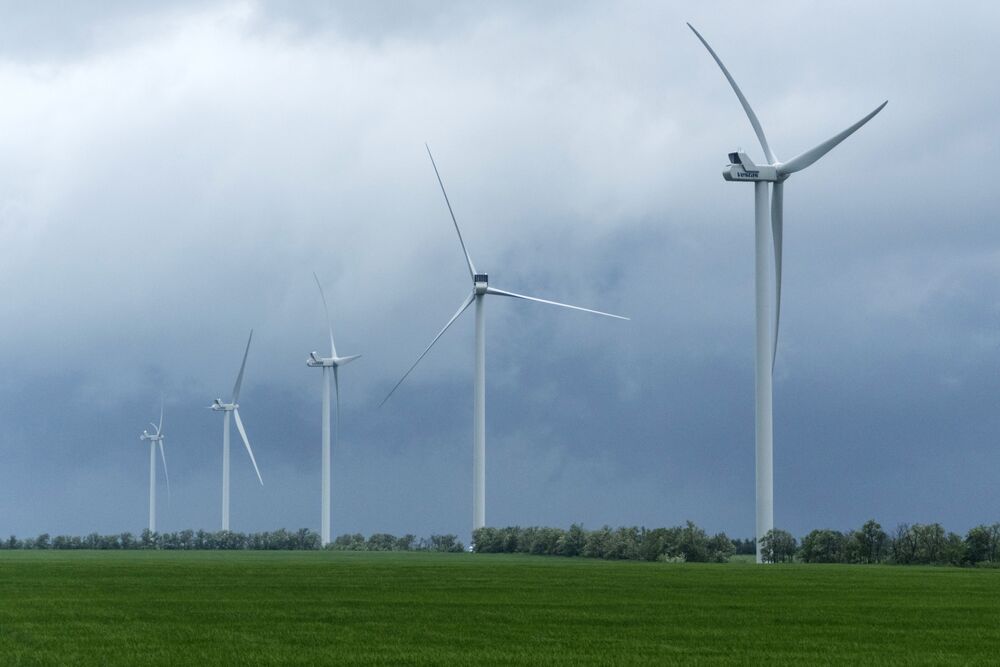
The prevailing wind has dramatically changed for the world's biggest maker of the swooshing blades that dot landscapes from Argentina to Mongolia.

Vestas Wind Systems A/S lost about a fifth of its stock market value after the Danish company said it was squeezing less profit out of sales of equipment and services compared with a year ago because of increased competition. Before Thursday's plunge, the shares had risen 15 percent this year.  

For skeptics in the energy industry, it provides fuel for their old argument that renewables just don’t make enough money. But the change in fortunes more reflects a formerly niche industry that relied on government support for so long and is now having to fight its own corner against the market forces of capitalism.

“You've got Vestas competing with the Chinese and it's a bloodbath,” Bruce Huber, founder and managing partner at Alexa Capital, an advisory firm on energy and technology.


Green technology such as solar panels and wind turbines are increasingly mass-produced, so basic supply-and-demand economics dictate that they get cheaper. There's also another layer of competition eating away at profitability. 

As nations try to make good on their Paris climate agreement pledges, renewable energy is being installed in just about every corner of the world. But rather than governments fixing the price of clean electricity, they're now letting the market find it. 

Developers must now compete against each other to win the right to build projects. The switch to such auctions has sent prices for power from onshore wind down as much as 60 percent and solar by half in some markets, according to Bloomberg New Energy Finance. 
Vestas Chief Executive Officer Anders Runevad told Bloomberg Television the squeeze simply came down to tougher competition suppressing prices. The profit margin on turbine sales and services narrowed by two percentage points in the third quarter compared with the same time in 2016, meaning earnings fell short of analysts’ estimates.
Green Skeptics

The company has made wind turbines since 1979, around the same time as oil giants from Royal Dutch Shell Plc to Exxon Mobil Corp. began dabbling in green energy.  Their biggest beef has been that the profit margins are much tighter than they are accustomed to in their main businesses. 

“The big oil companies are promoting very vigorously that the energy transition isn't going to be as fast as others say,” said Tom Burke, chairman of pro-green research institute E3G and a former senior adviser to the U.K. foreign secretary’s special representative on climate change. “Will they get behind pieces of news that support their case? Of course they will.”
The Danish company is not the only wind turbine maker adjusting to the new marketplace. Siemens Gamesa Renewable Energy SA said earlier this week it will cut 6,000 jobs while shares of General Electric Co., the largest turbine manufacturer in the U.S., has plunged by 36 percent this year.

There’s also an unpredictable future for the U.S., the wind energy industry’s biggest market after China.

The Republicans proposed reducing the tax break for clean energy producers, something that hit Vestas shares last week. A skeptic over climate change, President Donald Trump openly dislikes wind energy, saying the turbines are ugly and kill birds. He took legal action against the Scottish government to have one project halted because, he said, it would spoil views from his golf resort.


Monday, November 13, 2017

Solar Energy Capacity Will Rival Nuclear Power by the End of 2017/RNN

One source of power is growing, one closing down.   Renewables have closed the gap, pretty impressively, on conventional sources of power.

Be interesting to track renewables progress in potentially eclipsing coal-fired plants.


Global solar energy capacity is on the rise, and is fast catching up to nuclear, according to a report by Green Tech Media (GTM).
GTM’s research indicates nuclear is still slightly in front at 391.5 gigawatts (GW), compared with solar power’s expected 390GW capacity for 2017.
However, solar power capacity is expected to reach 871GW by 2022. This is higher than the expected capacities of either wind or nuclear by that time. Solar is expected to become the largest source of energy on a global level by 2050.
Earlier research by The International Energy Agency reached similar findings. A 2014 report by the agency stated the sun could be the world’s largest electricity source by 2050.
Solar is expected to outpace fossil fuels, wind, hydro and nuclear by then. Solar power’s increasing cost-effectiveness and convenience are considered to be major factors.
The world has experienced some significant growth in the use of solar power over the last 10 years.
This includes some large-scale solar projects as well as residential solar power installations.
With current trends and benefits being what they are, investment in solar energy looks set to continue well into the future.

Is Investing in Veganism Smart? Leonardo Di Caprio believes it is./RNN

This is a great question.  We just watched a documentary on The Perfect Human Diet which would deny that a Vegan menu is the right choice.  In fact they rigorously deny that eating meat net contributes to carbon as well.

Yet, legions of fans disagree and continue to avoid meat.

Regardless, this is a much as a financial discussion as it is one of food and health.  

SEE MORE AT RENEWABLE NOW.com


A new trend has hit the investment market, and a big financial backing by Leonardo Di Caprio has brought it to the forefront of this week’s financial news.  Di Caprio, a longtime supporter of veganism and cause that fight climate change, has invested in plant-based “meat” company BEYOND MEAT.  His investment was announced on October 19, and CEO Ethan Brown revealed that the Oscar-winning actor was involved in the creation of Beyond Meat’s revolutionary “Beyond Burger,” available in stores nationwide, and now officially served at TGI Friday’s.
In a statement, Di Caprio explained, “Shifting from animal meat to the plant-based meats developed by Beyond Meat is one of the most powerful measures someone can take to reduce their impact on our climate.”  Beyond Meat’s mission is to create solutions that replace animal protein with plant protein for consumers across the world....


Friday, November 10, 2017

Acidifying oceans a bad trip for marine ecosystems

The long tail of carbon on our planet and our various forms of life.

Acidifying oceans a bad trip for marine ecosystems

  • A new study is one of the few to investigate what ocean acidification might do to fish communities, by studying CO2-producing vents as proxies for elevated carbon environments.
  • Researchers found that common fish benefited from acidified environments while rarer fish disappeared.
  • The research has long-reaching implications for biodiversity and ecosystem functionality as the oceans acidify from absorbing the CO2 being pumped into the atmosphere.
A more acidic ocean under climate change threatens to reconfigure entire ecosystems by advantaging some fish species to the detriment of others, a new study has found. The research is one of only a few that go beyond the lab to study how species interactions are changing in nature under more extreme conditions.

Researchers from the University of Adelaide and the University of Hong Kong showed that a higher concentration of carbon dioxide in the oceans, which reacts to turn seawater more acidic, favors common fish species, allowing them to double their populations. But that might also mean the downfall of rarer, subordinate competitors, leading to biodiversity loss and a total restructuring of fish communities, with numerous ecological impacts.

Blue damselfish in Komodo, Indonesia. Photo: Rhett A. Butler.
“For 10 to 20 years now, scientists have conducted lab experiments to understand how changes in seawater chemistry will affect individual marine organisms. These have been really useful, but they are inaccurate representations of nature,” says David Koweek, a postdoctoral research scientist at the Carnegie Institution for Science, who was not involved in the research. “We have very little understanding about how ocean acidification causes shifts in organisms’ interactions and how these scale to create different outcomes for ecosystems and the resources people rely upon.”


The study, published in Current Biology Journal, looked at how ocean acidification might influence species interaction and how that might determine who thrives and who doesn’t. As species sharing the same waters interact, the disappearance of some could reverberate far along the food chain and destabilize ecosystems.

Oceans absorb about 30 percent of CO2 from the atmosphere. But the oceans’ chemistry changes as the level of CO2 in the air increases, with seawater dropping in pH and turning more acidic.

The common triplefin. Photo: Ian Skipworth. Public domain.
Understanding how ocean acidification affects biodiversity is important, as a rich variety of species, each with their specific roles in the environment, keeps ecosystems functioning and helps buffer against environmental changes.


“If there are more species, the network of their interactions is stronger and more resources are being used, making the community more robust to disturbances such as climate change,” said Ivan Nagelkerken, a professor of marine ecology at the University of Adelaide and lead author of the study.

Nagelkerken and his team spent three years analyzing fish communities around natural CO2 vents in shallow temperate reefs. Venting of carbon dioxide in the ocean happens naturally along faults and fractures in geologically active areas, usually volcanic ones. These vents release bubbles of CO2 that dissolve in the water in amounts similar to predicted CO2 concentration levels for the year 2100 (around 1,000 parts per million, according to some models), Nagelkerken said.

Researchers conducted the study on Whakaari (White Island), a volcanic outcrop in the Bay of Plenty off New Zealand’s North Island, where they compared two vents to two control sites.

Coral, damselfish and anemones in Komodo, Indonesia. Photo: Rhett A. Butler.
The study found that the number of species was lower around CO2 vents than in areas less rich in carbon (nine versus 14 species). Perhaps more importantly, the density of predator species – which play a key role in maintaining population levels among more common fish species – was 50 percent lower near CO2 vents, while the total density of fish was 1.5 times higher.


Community structures were significantly altered, as populations of dominant species such as the common triplefin (Forsterygion lapillum) and the crested blenny (Parablennius laticlavius) doubled in density, while those of subordinate species, such as the Yaldwin’s triplefin (Notoclinops yaldwyni) and blue-eyed triplefin (Notoclinops segmentatus), almost halved.

In carbon-richer waters, dominant species also benefited from a higher abundance of invertebrates to feed on. Previous studies have shown that a drop in seawater pH affects fish neurological functions and triggers unusual behaviors; in this case, ocean acidification appeared to reward riskier behavior. Combined with a plummeting population of predators and more available resources, such an environment gives common species the upper hand.
Reducing overfishing of predators is one of the keys to preventing biodiversity loss in increasingly acidic waters, according to the study’s authors. Healthy predator populations would help control common species and give their rarer competitors better survival odds, even as marine ecosystems may become further destabilized as ocean acidification worsens.

While CO2 vents don’t provide a perfect picture of future acidic oceans, they allow scientists to study real-life conditions that are otherwise difficult to replicate in the lab.

The crested blenny. Photo: Ian Skipworth. Public Domain.
These results discount a scenario in which fish species would adapt to higher carbon concentrations to counter the effects of ocean acidification.


Another area of interest, according to Koweek, is looking at how ocean acidification and ocean warming may interact to change our oceans’ biodiversity and ecosystems.
Since the dawn of the Industrial Revolution some 150 years ago, surface waters have become 30 percent more acidic; but by 2100 they could be 150 percent more so if greenhouse gas emissions rmain at current levels, according to the National Oceanic and Atmospheric Administration.

While research on ocean acidification has mostly looked at its effects on coral reefs, the impact is not limited to tropical waters.

“Colder waters are capable of absorbing more carbon dioxide,” Koweek explained. “So ocean acidification is generally thought to be progressing much faster in colder temperate and polar waters. The cold waters that reach the west coast of North America every spring and summer are thought to be some of the world’s most rapidly acidifying.”

The blue-eyed triplefin. Photo: Ian Skipworth. Public domain.
So what should be done? The same measures that will slow climate change, such as phasing out fossil fuels for clean energy sources, will also combat ocean acidification.
“The only effective way to prevent ocean acidification from getting worse at a global scale is to stop using the air and sea as waste dumps for our carbon dioxide pollution,” said Ken Caldeira, a climate scientist at the Carnegie Institution for Science.

Thursday, November 9, 2017

18 Veterans Programs Feeding the Food Movement/Food Tank

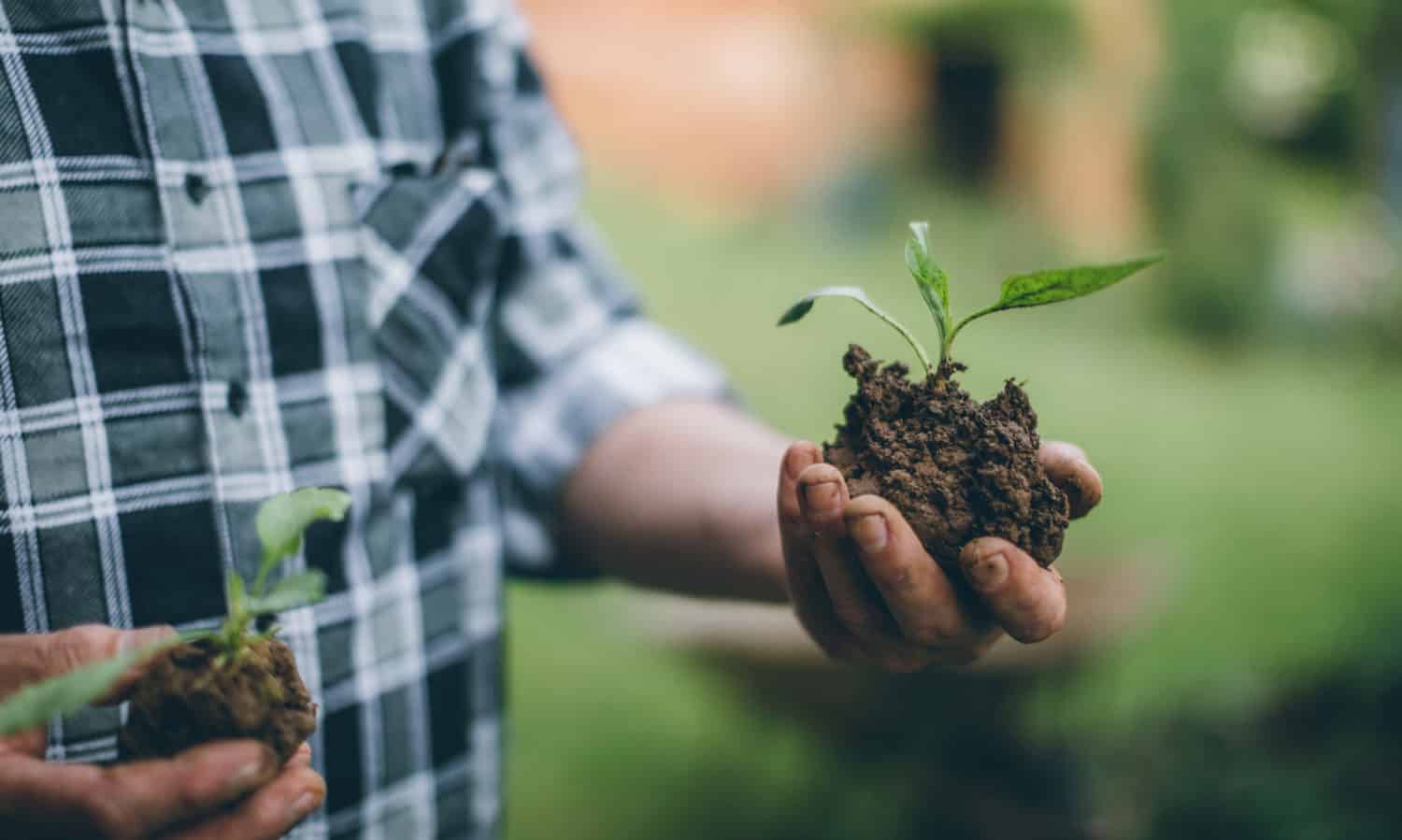
How is this for an opening:  "This Veterans Day, Food Tank brings you 18 initiatives from around the United States that are working to help veterans transition to healthy, productive civilian lives through farming and agriculture"

If you ever doubt the power of transformation, this is a great reminder of the miracle of repairing global health.

What a multi-pronged approach to a better food system.

Food Tank is highlighting 18 initiatives that work to train veterans of the U.S. Armed Forces to feed America.

This Veterans Day, Food Tank brings you 18 initiatives from around the United States that are working to help veterans transition to healthy, productive civilian lives through farming and agriculture.
By providing veterans with roadmaps to help them become integral players in the sustainable food system, these universities, NGOs, and companies work to help participants heal from wounds of all kinds. They work to educate veterans by providing job and skills training, connection to financial and technical resources, and assistance in the difficult task of acquiring land.
There are more than 20 million veterans of the U.S. Armed Services living domestically. According to the U.S. Bureau of Labor Statistics, 22 percent of veterans in the U.S. have a service-related disability, or more than 4.4 million veterans.
Farming can positively impact the lives of veterans and survivors of conflict around the world. According to the U.S. Centers for Disease Control and Prevention (CDC), in addition to producing healthy food, gardens also help people to engage in physical activity, build marketable skills, improve personal social well-being, and decrease domestic violence.
These projects are not only helping veterans succeed in feeding and protecting their families and communities, they are also helping to build a brighter and more resilient food system for us all.
 1. Armed to Farm
Armed to Farm (ATF) is a program of the National Center for Appropriate Technology (NCAT) that provides sustainable agriculture training for veterans. A combination of farm tours and classroom instruction, the program focuses on business planning, livestock production, and fruit and vegetable production. NCAT specialists work to provide reliable information to participating veterans concerning sustainable and organic agriculture, how to get started in farming, how to qualify for government programs that reward land stewardship and resource conservation, and how to pursue profitable niche markets such as organic meats and grains or agriculture tourism.
2. Combat Boots to Cowboy Boots
Combat Boots to Cowboy Boots is a program of the Nebraska College of Technical Agriculture that prepares eligible military personnel, their families, and armed forces veterans to become farmers and ranchers. By utilizing existing programs funded by the federal government and various state and local agencies, the program helps to create successful business succession plans that match participants with existing farm, business, or ranch owners.
3. Delaware Valley University Organic Farming Program
The Delaware Valley University Organic Farming Program is a one-year certificate program offered in partnership with the Rodale Institute. The curriculum combines classroom courses on animal science, marketing, vegetable production, organic crop science, entomology, weed management, and sustainable agriculture. This program is open to all students but was created with military veterans in mind and has support from the school’s office of veteran and military affairs. Delaware Valley University is a yellow-ribbon school, meaning that they allow veteran students to pay tuition via grants provided through the GI bill as well as receive a housing allowance through the Department of Veteran Affairs (VA).
4. Enhancing Veterans Farm Fellows Program
Enhancing Veterans Farm Fellows Program at the Veterans Farm enrolls combat veterans from every era in a three-month intensive training curriculum to teach them everything from creating a business plan to growing organic produce. The Florida-based organization also works in south Georgia, and focuses on providing services to veterans who suffer from traumatic brain injury, post-traumatic stress disorder, and other related injuries, as well as young veterans most at-risk of unemployment.
5. Farmers Assisting Returning Military (FARM)
Farmers Assisting Returning Military (FARM) was founded by Iraq War veterans James Jeffers and Steve Smith after they founded an urban farming business called Eat the Yard, which cultivated fresh produce in community gardens. As they learned firsthand how rewarding and fulfilling farming could be for soldiers seeking to reintegrate into civilian life, they launched FARM to support others like them. They run a Future Farmer Internship Program, which is a cooperative educational hands-on training program for veterans who want to explore careers in agriculture. They also run a three-phase training and technical assistance program to support veteran beginning farmers and ranchers in partnership with Texas A&M University, called The Battleground to Breaking Ground Entrepreneurial Training Project.
6. Growing Careers in Agriculture
Growing Careers in Agriculture, a program of the Farmer Veteran Coalition (FVC), provides training and apprenticeships to veterans of the wars in Iraq and Afghanistan. Apprenticeships are paid, last three to six months, and accompany educational and training opportunities with organic farms and artisan food businesses in northern California, though the program plans to expand nationally. Participating veterans are paired with individual FVC case managers. FVC works with former members of the armed forces in 48 states through other programs.
7. Growing Warriors Project 
Growing Warriors Project is a national veteran-oriented food security organization based in central Kentucky. By working to equip veterans and their communities to grow and preserve high-quality, naturally grown produce through a hands-on curriculum, the project seeks to help veterans build important community roles for themselves as they transition back to civilian life. The project’s founder, Michael Lewis, promotes sustainable farming as a literal form of nation building for which returning veterans of the U.S. Armed Forces are well-suited. Since 2012, the program has helped more than 65 veteran families grow tens of thousands of pounds of organic food.
8. Heroic Food
Heroic Food is a New York-based, tuition-free farmer-training program for military veterans in partnership with the FVC. The nonprofit offers a Full-Year Immersion (FYI)training program with a holistic support system, including paid training positions on mentor farms and housing. The immersion program is designed to qualify trainees for farm crew leadership and assistant manager positions upon completion, by teaching them professional levels of competence in both production and management skills. The program also offers Farm Entry Short Courses (FESCs), including seminar and hands-on workshops for veterans who are new to agriculture or interested in farming.
9. Hope Farms
Hope Farms is a Houston-area farmer training program run by Recipe for Success that prioritizes the selection of U.S. Veterans as paid farm trainees. With the goal of preparing trainees to establish their own successful urban farming enterprises, the program teaches sustainable horticulture, financial literacy, farm accounting, marketing and sales, planning, and produce controls. The Recipe for Success Team helps match graduates to available urban land to help kickstart their enterprises. Graduates also enroll as members of the Hope Farms Co-op, a support program including advice and counsel, organic growing classes, access to equipment, co-op branding and distribution of products, and an on-site farmers market.
10. Semper Fresh Farms
Semper Fresh Farms is a local networking and vocational placement organization in Monterey County, California, run by two U.S. Marine Corps veterans. The farm works in conjunction with veteran organizations, such as the FVC, as well as many local growers to provide a range of opportunities for participating veterans to build diverse skillsets. The program aims to help transitioning veterans obtain the necessary skills to operate sustainable farms, oversee farm-to-table production, and understand the logistics of growing seasons.
11. Servicemember Agricultural Vocation Education (SAVE)
Servicemember Agricultural Vocation Education (SAVE) is the newest member of this list and, though they have already started leading workshops, has plans to build a teaching farm and healing center on more than 100 acres in Kansas. In partnership with the Kansas State University Colleges of Architecture and of Agriculture, SAVE staff has created both business and architectural plans for the new center, and is now working on funding. In the meantime, they have trained 184 transitioning soldiers and 24 veterans in beekeeping and other small-scale agriculture skills.
12. Veterans Agricultural Center of Connecticut (VACC) 
Veterans Agricultural Center of Connecticut (VACC) provides both training and therapy to returning combat and interested veterans through a six to eight-week hands-on training paired with online training. VACC provides instruction with a focus on organic hybrid-hydroponic systems and a goal of preparing veterans to start home-based farms or businesses. Participants will be employable by the end of the program for greenhouse operations, cooperatives, farm management, produce delivery, or sales.
13. Veteran Farmers of America (VFA)
Veteran Farmers of America (VFA) currently offers paid, two-week internships for veterans at a variety of local farms and agricultural facilities in Ventura County, California. Placements can focus on many kinds of operations, including row crop production, animal husbandry, hydroponics, organics or conventional farming, office management, and warehouse operations. VFA has long-term plans to expand operations to include a veteran-operated farm and a scholarship program.
14. Veteran Farmer Program
The Veteran Farmer Program is a hands-on program of the Arcadia Center for Sustainable Food and Agriculture that encourages veterans to engage in organic and regenerative farming practices to capitalize on an ever-growing market of local, sustainable food. They operate a 10-month Veteran Farmer Reserve Program for veterans interested in exploring agriculture without committing to a full-time training program. They also provide a one-year, intensive on-farm training program called the Veteran Farm Fellowship Program. Participants are involved in all aspects of Arcadia’s farm, located in the Washington, D.C., area, including food access and distribution, working with local chefs and retailers, and farm and nutrition education. The Fellowship Program also offers an optional second year in which Fellows are placed in paid externships at local sustainable farms.
15. Veteran Farmers Project 
Veteran Farmers Project is a program of the Center for Rural Affairs that gives veterans, almost a million of whom come from rural communities, an opportunity to return to their agricultural roots and reinvigorate America’s small farms. The Project provides veterans with business and agriculture education to help them succeed as farmers, regardless of experience level. VFP staff can coordinate personalized individual consultations and counseling for participating veterans who have questions regarding farm production, business, and financing.
16. Veterans Sustainable Agriculture Training (VSAT) Program
Veterans Sustainable Agriculture Training (VSAT) Program trains transitioning service men and women in all aspects of agriculture and food production, including hydroponics, environmental control, and greenhouse management during a six to twelve-week intensive course. The program is a partnership between California State Polytechnic University and Archi’s Acres, a veteran-owned farm. Veterans in the program learn about topics including hydroponics, greenhouse management, composting systems, and soil biology. The program has had more than 300 graduates since 2009.
17. Veterans to Farmers (VTF)
Veterans to Farmers (VTF) strives to bring family farming back to the forefront of the American landscape. VTF was founded by U.S. Marine Corps Veteran Buck Adams in 2011 after overwhelming veteran interest in his organic greenhouse employment program for veterans. Upon completion of their 12-week educational program, VTF provides employment support to participating veterans. VTF’s program is built around the understanding that farming utilizes many of the same skills as are required in the military, including hard work and attention to detail.
18. Vets to Ag
Vets to Ag is a program at Michigan State University that trains homeless U.S. veterans to work in agriculture. Participants are trained in plant and soil science, equipment operation, integrated pest management, computer skills, and other topics. The program includes room and board for the entire training period, as well as both classroom instruction and hands-on training. The program also integrates job preparation and employer outreach skills.