Saturday, December 16, 2017

Pathways to Green India: Steal these ideas

Good update from Earth Network:


Though challenged with many environmental problems, a huge population and an economy in which every rupee counts, India is increasingly adept at finding and scaling up with novel solutions.
Now, this just in from our Earth Day Network office in India. They've released Volume II of their new ebook Pathways to Green India, Innovative Ideas for Public Spaces and it's full of solutions that apply wherever you are in the world. Take a look and steal these ideas to innovate and green your life.
Some new ideas are surprisingly old. For example, lattice screens made of stone, once common in Western India, are being incorporated into the walls of modern structures. As architects explain, these not only provide privacy, but also act as thermal buffers, cool in hot weather and warm when it's cool. They're made from antibacterial limestone and painted with "chunna", a system that allows the walls to breathe
Across India edible urban landscapes and roof gardens are adding green space and improving human nutrition.Community workshops bring rooftop gardeners under one umbrella to exchange information on what works and what doesn't, which plants grow best and how to deal with pests. Gardening fairs feature just about anything related to gardening and people can take home everything they need to start a food garden. Children play a big part, too. Gardens are also set up in schools so that students get hands-on experience.
Students of the BM English School, for example, grow vegetables that are then sold to their teachers and parents. The concept of urban farming is gaining momentum providing food that is readily available, nutritious and chemical-free.
Minarets as wind scoops, "baghs" or gardens around factories to help conserve biodiversity and build the green cover, recycling "kabaad" or discarded items to set up new buildings—all these and more are described in this eBook.
Fresh from our India office, the new volume of Pathways to Green India. Please read it and steal these ideas!

Friday, December 15, 2017

Rhode Island Becomes First State to Embrace SITES Certification for Sustainable Land Development in Public Policy

Another great step forward by a small state with a big heart for building a cleaner, brighter future:

State’s Green Buildings Act amended to include SITES and LEED for Neighborhood Development


PROVIDENCE, Rhode Island – October 10, 2017 – In a groundbreaking legislative move, Rhode Island has become the first state to include the Sustainable SITES Initiative (SITES) for land design and development in public policy. The Senate passed S-0952A/H-5427A amending its Green Building Act to include public lands and specifying SITES and LEED for Neighborhood Development (LEED ND) as applicable rating systems for certification. Governor Raimondo signed the bill into law on Thursday, October 5.
The state has been applying LEED in its newly constructed state-funded facilities since 2010. Starting immediately, Rhode Island and local governments working on new projects that address the space between buildings through public parks or landscapes will also consider applying SITES and LEED ND to sites adjacent to public facilities. LEED and SITESare complementary and can be used independently or in tandem, earning credits that count toward both rating systems. The U.S. General Services Administration has also adopted SITES and has been using the rating system for its capital construction program since 2016.
“Rhode Island is demonstrating that green building strategies should extend beyond just our buildings and into our landscapes and communities,” said Mahesh Ramanujam, president and CEO, U.S. Green Building Council and Green Business Certification Inc. (GBCI). “By encouraging the use of green business certifications like SITES and LEED ND for public projects, they are working to create healthier, more resilient places for residents and businesses.”
Used by landscape architects, engineers, architects and developers, SITES is based on the understanding that land is a crucial part of the built environment. It provides a roadmap for creating regenerative systems that foster resiliency; ensures future resource supply; and enhances human wellbeing. SITES-certified projects are better able to withstand and recover from catastrophic events, such as flooding, and can help reduce water and energy demand, improve air quality and promote human health and wellbeing.
LEED ND incorporates the principles of smart growth, New Urbanism, and green building into a global standard for green neighborhood planning and design. The result is a voluntary leadership standard for neighborhood development that provides criteria to help evaluate and guide development projects in terms of where they’re located, how they’re designed and how they perform.
“Now, more than ever, we need strong environmental leadership,” Rhode Island Governor Gina M. Raimondo said. “I am proud that Rhode Island – the Ocean State – is on the front lines of fighting climate change. Through net metering, we're making it easier for homeowners and businesses to invest in clean energy resources. We are the first and still only state in the nation with an offshore wind farm. And, we're partnering with other states to cut greenhouse gas emissions in the region, all while creating new clean energy jobs for our economy. Thanks to this new legislation, we can build on these accomplishments to extend our building sustainability efforts to public lands.”
Building on an eight-year legacy of green public buildings policy, the state’s decision is a signal of its support for a sustainably built environment. Green infrastructure and built landscapes help drive informed decisions in planning and design that strengthen communities, boost resilience and reduce our impacts on natural resources.

Choreography could offer city planners a new perspective on designing for patterns of movement: Where Art and Engineering Merge

People are moving to cities.  Those cities need to get better at housing and moving those people around. Smart transportation is critical to quality of life.  This article bringing creativity to finding the right solutions:

8795987.jpeg

There is little more important for the sustainability of cities than the ways we move around them. With transportation estimated to account for 30% of energy consumption across the majority of the world’s most developed nations, reducing the necessity for energy-reliant vehicles is fundamental to addressing the environmental impact of mobility.
But as cities become the predominant habitat for most people in the world, it is important to think about other kinds of sustainability too. The ways we travel impact our physical and mental health, our social lives, our access to work and culture, and the air we breathe. Engineers are tasked with changing how we travel round cities through urban design, but the engineering industry still rests on the assumptions that led to the creation of the energy-consuming transport systems we have now: The emphasis placed solely on efficiency, speed, and quantitative data. We need new approaches in order to help engineers create the radical changes needed to make it healthier, more enjoyable, and less environmentally damaging to move around cities.
And my colleagues and I think that dance might hold some of the answers. That is not to suggest everyone should dance their way to work, however healthy and happy it might make us. But rather that the techniques used by choreographers to experiment with and design movement in dance could offer engineers with tools to stimulate new ideas in city-making. To test this out, a project led by Ellie Cosgrave at UCL is bringing planners and engineers designing systems for urban mobility together with choreographers to see how their practices could enrich one another.
From reality to blueprint
Sociological theory about the nature of work can help us to understand why choreography might help. Richard Sennett, an influential urbanist and sociologist who transformed ideas about the way cities are made, argues that urban design (including, we would argue, engineering and planning as much as it does architecture) has suffered from a severance between mind and body since the advent of the architectural blueprint.
Whereas the medieval builder improvised and adapted construction through their intimate knowledge of materials and embodied experience of the conditions in a site, building designs are now conceived and stored in media technologies that detach the designer from the physical and social realities they are creating. The “disembodied design practices” created by these technologies are essential for managing the technical complexity of the modern city. But they simplify reality in the process.
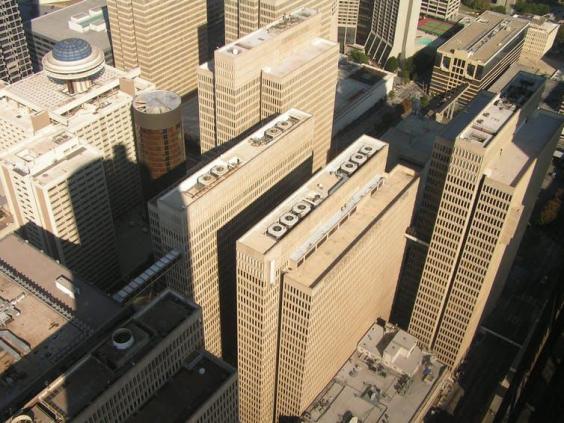
To illustrate, Sennett discusses the Peachtree Centre in Atlanta, a development emblematic of the modernist approach to urban planning prevalent in the 1970s. Peachtree created a grid of streets and towers intended as a new pedestrian-friendly downtown for Atlanta. This, according to Sennett, failed because its designers had invested too much faith in computer aided design to tell them how it would operate.
They didn’t understand that purpose-built street cafes could not operate in the hot sun without the awnings common in older buildings, and would need energy-consuming air conditioning instead, or that its giant car park would feel so desolate as to put people off from getting out of their cars. What seems entirely predictable and controllable on screen has unexpected results when translated into reality.
8957.jpg
The same is true in transport engineering, which uses models to predict and shape the way people move through the city. Again, these models are necessary, but they are built on specific world views in which certain assumed forms of efficiency and safety are privileged over other experiences of the city. Designs that seem logical in models appear counter-intuitive in the embodied experience of their users.
The guard rails that will be familiar to anyone having attempted to cross a British road, for example, were an engineering solution to pedestrian safety based on models that prioritise the smooth flow of traffic, guiding pedestrians to specific crossing points and slowing them down through staggered access points. In doing so they make crossings feel longer, introducing psychological barriers greatly impacting those that are the least mobile, and encouraging some others to make dangerous crossings to get around them. These barriers don’t just make it harder to cross the road, they sever communities and decrease opportunities for healthy transport. As a result, many are now being removed, causing disruption, cost, and waste.
If their designers had the tools to think with their bodies, and imagine how these barriers would feel, could there have been a better solution in the first place? We think so. In order to bring about fundamental changes to the ways we use our cities, engineering will need to develop a richer understanding of what motivates people to move in certain ways, and how it affects them.
Dancing through cities
Choreography may not seem an obvious choice for tackling this problem. Yet it shares the aim of designing patterns of movement within spatial constraints.
Choreography is an embodied art form developed almost entirely through instant feedback between improvisation of ideas with the body, and tactile feedback from those ideas. It uses models and forms of notation to plan movements that dancers will make, with qualitative as well as quantitative information. Choreographers have an extremely rich understanding of the psychological, aesthetic, and physical implications of different ways of moving.
Observing the choreographer Wayne McGregor, cognitive scientist David Kirsh described how he “thinks with the body”. Kirsh argues that by using the body to simulate outcomes, McGregor is able to imagine solutions that would not be possible using purely abstract thought. This kind of embodied knowledge is given great value in many realms of expertise, but currently has no place in formal engineering design processes.
The value of all this for engineering is currently hypothetical. But what if transport engineers were to improvise design solutions and get instant feedback about how they would work from their own embodied experience? What if they could model designs at full scale in the way choreographers experiment with groups of dancers? What if they designed for emotional as well as functional effects?
By comparing the techniques and world views of choreography and engineering, we aim to find out.
John Bingham-Hall is a researcher in urban design and culture at UCL. This article was originally published on The Conversation 

Thursday, December 14, 2017

The world's greenest cruise ship will have sails

Good news on the shipping, cruise side.  We will soon have a prototype ship that is eco-friendly.  A big step forward in protection our oceans, in particular.

Every industry needs to invest in better, more efficient equipment and technology.  What we learn at sea, on the new Peace Boat, will help us craft better homes and commercial buildings as well.  Sharing best practice across many verticals is one of the things we do very well in the world of sustainability.  

The world's greenest cruise ship will have sails


Cruise ships have a bad rap with environmentalists. One cruise operator is hoping to change that.

Peace Boat, a Japanese non-governmental organization which runs educational cruises, is working on an ambitious project to build the most sustainable vessel in the booming industry.

Now in the last stages of planning, the "Ecoship" will be built by Finland's Arctech. It will cost about $500 million, financed in part by impact investors -- funds, rich families and individuals who want to use their cash to improve the world as well as make a profit. 

"Ecoship was a dream for me," said Peace Boat founder Yoshioka Tatsuya. "Using a conventional ship was frustrating for us, even though we tried our best to reduce the emissions."

A conventional cruise ship can burn hundreds of tons of heavy fuel oil a day and emit as much particulate matter as a million cars, according to German environmental group NABU.
The "Ecoship" will be fueled by a much cleaner combination of solar panels, wind power and liquid natural gas, and should produce 40% less carbon dioxide than a traditional cruise ship.

"We will have 10 sails, so it will use the wind like traditional sailing ships," Tatsuya explained.

Peace Boat is talking to impact investors in Europe, America, China and Japan and could offer them bonds or equity. It will also use loans, and possibly crowdfunding, to raise the total.

ecoship cruise ship
Artist's impression of the "Ecoship." Peace Boat has signed a letter of intent with Finland's Arctech to build the ship.


"We need to choose carefully who we work with, as they need to share our long-term vision, not just want to finance an asset," said Tatsuya.

"Shipping finance companies are quite conservative and our design and plan is quite creative, quite unique. That uniqueness adds value but it can be a challenge to convince conservative financiers."

The "Ecoship" is designed to mimic the shape of a whale. While smaller than many cruise ships currently being built, it will accommodate 2,000 passengers, and host conferences and events while docked.

ecoship interior
Artist's impression of the interior of the "Ecoship."

Charting a new course
Peace Boat hopes it will set sail on its maiden voyage in 2020, and that it will quickly become a showcase for the future of the industry.
"There's potential with a very green cruise ship to get a lot of attention at each port of call and that can make an impact," Tatsuya said.

And he doesn't plan to stop at one ship. Demand for cruises, and green tourism is booming.


"At least five ships by 2030 is necessary because of market demand," said the Peace Boat founder. "That's the first step, but in time, 10 ships."
Passengers on Peace Boat cruises pay between $15,000 and $18,000, which includes travel, meals and on board activities.

There's a mixture of entertainment, wellness programs, lectures and workshops on topics such as peace, politics, environmental change and human rights.

Wednesday, December 13, 2017

North Sea water and recycled metal combined to help reduce global warming/Science Daily


Good news on the R & D side.  We believe, and we've reported on this many times, that advancements in carbon capture will help change the world.  Here we see sea water and recycled metal working together to proved another source of capture.

Source:
University of York
Summary:
Scientists have used sea water collected from Whitby in North Yorkshire, and scrap metal to develop a technology that could help capture more than 850 million tons of unwanted carbon dioxide in the atmosphere.
ScienceDaily

Scientists at the University of York have used sea water collected from Whitby in North Yorkshire, and scrap metal to develop a technology that could help capture more than 850 million tonnes of unwanted carbon dioxide in the atmosphere.
High levels of carbon dioxide in the atmosphere are a major contributor to greenhouse gases and global warming. Carbon overload is mainly the result of burning fossil fuels, such as coal and oil, as well as deforestation.
Global efforts are being made to reduce carbon dioxide levels as well as find novel ways of trapping excess gases from the atmosphere. The team at York have now found a way to safely trap the gas as dawsonite, a solid mineral and natural component of the Earth's crust.
Professor Michael North, from the University's Department of Chemistry, said: "We wanted to look for methods of trapping the gas using environmentally friendly tools to produce a result that could be highly scalable to capture millions of tonnes of unwanted carbon dioxide.
"We started with the realisation that using graphite, the material used in pencils, to line aluminium reactors, results in the mineralisation of carbon dioxide. We wanted to trap the gas at much higher levels, using low-energy processes, so we decided to look at waste materials, such as scrap metals, to see if this could be done without using chemical agents as a catalyst."
Researchers filled the aluminium reactor with sea water taken from Whitby Bay, and waste aluminium such as that found in kitchen foil or food wrappings. The gas is transferred to the sea water inside the reactor. Electricity, captured from solar panels, is passed through it, resulting in the aluminium turning the dissolved carbon dioxide into the mineral, dawsonite.
Professor North said: "Tens of millions of tonnes of waste aluminium are not recycled each year, so why not put this to better use to improve our environment? The aluminium in this process can also be replaced by iron, another product that goes to waste in the millions of tonnes. Using two of the most abundant metals in the Earth's crust means this process is highly sustainable."
The research showed that 850 million tonnes of carbon dioxide could be mineralised each year using a combination of sea water, solar-powered electricity, and scrap metal, eliminating the need to use high energy gas-pressurisation and toxic chemicals to produce the same effect.
Unlike other electrical reaction systems for carbon dioxide treatment, hydrogen is not needed to cause the chemical reaction in the first instance, which would normally make the process more expensive.
Instead, hydrogen is produced from the electrical circuit and becomes a side-product of the process. Hydrogen gas, a non-polluting gas that is valuable to the future of fuel production at low cost and 'zero emissions'.
Researchers are now working to maximise the energy efficiency of the process and allow the hydrogen by-product to be collected and utilised, before seeking to build toward full-scale production.
This work is published in the journal ChemSusChem.

The World’s Food Sustainability Leaders Announced/Food Tank

Food, combined with water, is our most important resource.   How we grow, distribute, consume and not waste is one of our greatest challenges;  and greatest victory if we do it all well.

Here we see France and others implementing programs to drive food efficiency.  That brings us one step closer to achieving global social and economic equity.

France ranks number one in the 2017 Food Sustainability Index, which ranks countries according to their food system sustainability.

France ranks number one in the 2017 Food Sustainability Index (FSI), which grades 34 countries according to their food system sustainability. Developed by the Economist Intelligence Unit and the Barilla Center for Food & Nutrition Foundation (BCFN), the FSI evaluates food sustainability issues across three pillars—food loss and waste, sustainable agriculture, and nutritional challenges.
Other top-scoring countries include Japan, Germany, Spain, Sweden, Portugal, Italy, South Korea, and Hungary. These countries typically demonstrate strong and effectively implemented government policy that address the three main pillars. Scores on lifestyle, such as physical activity and diet composition, as well as social and climate-related indicators, such as the participation rate of women in farming and monthly freshwater scarcity, are also important factors in the overall ranking.
The top performer in the food loss and waste pillar is France, followed by Germany, Spain, and Italy. In 2016, the French government passed legislation that prohibits supermarkets from throwing away food approaching its sell-by-date, requiring them to donate it to charities or food banks. Other measures have reduced food wastage in schools and prompted companies to report on food waste data.
The top performer in the sustainable agriculture pillar is Italy, followed closely by South Korea, France, and Colombia. Italy has pioneered new techniques to reduce water loss in agriculture and has implemented sustainable agricultural techniques for climate change mitigation and adaptation nationwide.
Japan scores the highest in the nutritional challenges pillar, ranking first in the life expectancy at birth—84 years—and the healthy life expectancy indicators. South Korea, Hungary, France, and Portugal also scored highly.
According to the index, high-income countries tend to have a higher level of food sustainability, however, there are several outliers. The wealthiest nation in the index, the United Arab Emirates, ranks last, while the United States ranks twenty-first. Ethiopia, the poorest country FSI researchers evaluated, ranks twelfth. Other factors such as high levels of human development, smaller populations, and slower rates of urbanization also correlate with higher food sustainability.
An interactive online database providing country ranking and profiles, case studies, and infographics is available on the FSI website.

Tuesday, December 12, 2017

Whirlpool Corporation Announces Plans for Wind Turbines/RNN

Renewable Now has been reporting on the business side of green for nearly 4 years.  During that time we've seen incredible growth around the green economy and its related technology.

We believe, and we see it again here with Whirlpool's commitment to renewables, that co's are driving much of our transformation to clean energy and social-impact changes.  Those companies not in line are starting to become the lepers.  And they will quickly become dinosaurs.  


    Whirlpool Corporation announced plans for three wind turbines to power its manufacturing facility in Greenville, Ohio and further build on the company’s 46-year commitment to sustainable manufacturing. Beginning construction in early 2018, the turbines will be the same as those developed for Whirlpool Corporation’s manufacturing facilities in Findlay, Marion, and Ottawa, Ohio, and will be developed in coordination with One Energy Enterprises.
The three Greenville turbines will generate more than 12 million kWh annually and offset approximately 70 percent of the plant’s electricity consumption – eliminating the equivalent of more than nine thousand annual tons of CO2. This is equivalent to generating enough clean energy to power more than 900 average American homes.
“By investing in on-site wind energy, we’re ensuring that Whirlpool Corporation is set up for success now and in the future, while also expanding the commitment to sustainability that is vital to our company,” said Ron Voglewede, Whirlpool Corporation Global Sustainability Director. “We are proud that this will be our fourth of five plants in Ohio to utilize sustainable energy, and we are committed to continuing to grow initiatives and projects like these that help reduce our overall energy footprint.”

MORE AT:  http://www.renewablenownetwork.com/whirlpool-corporation-announces-plans-wind-turbines/  .